FOLIO I · THINKER · GEN. 01 · N° 001

Carl Menger

Works
14
Articles
26
Generation
1.
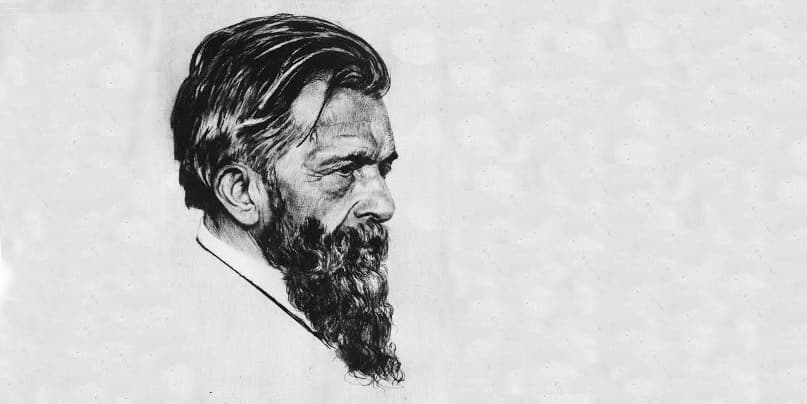
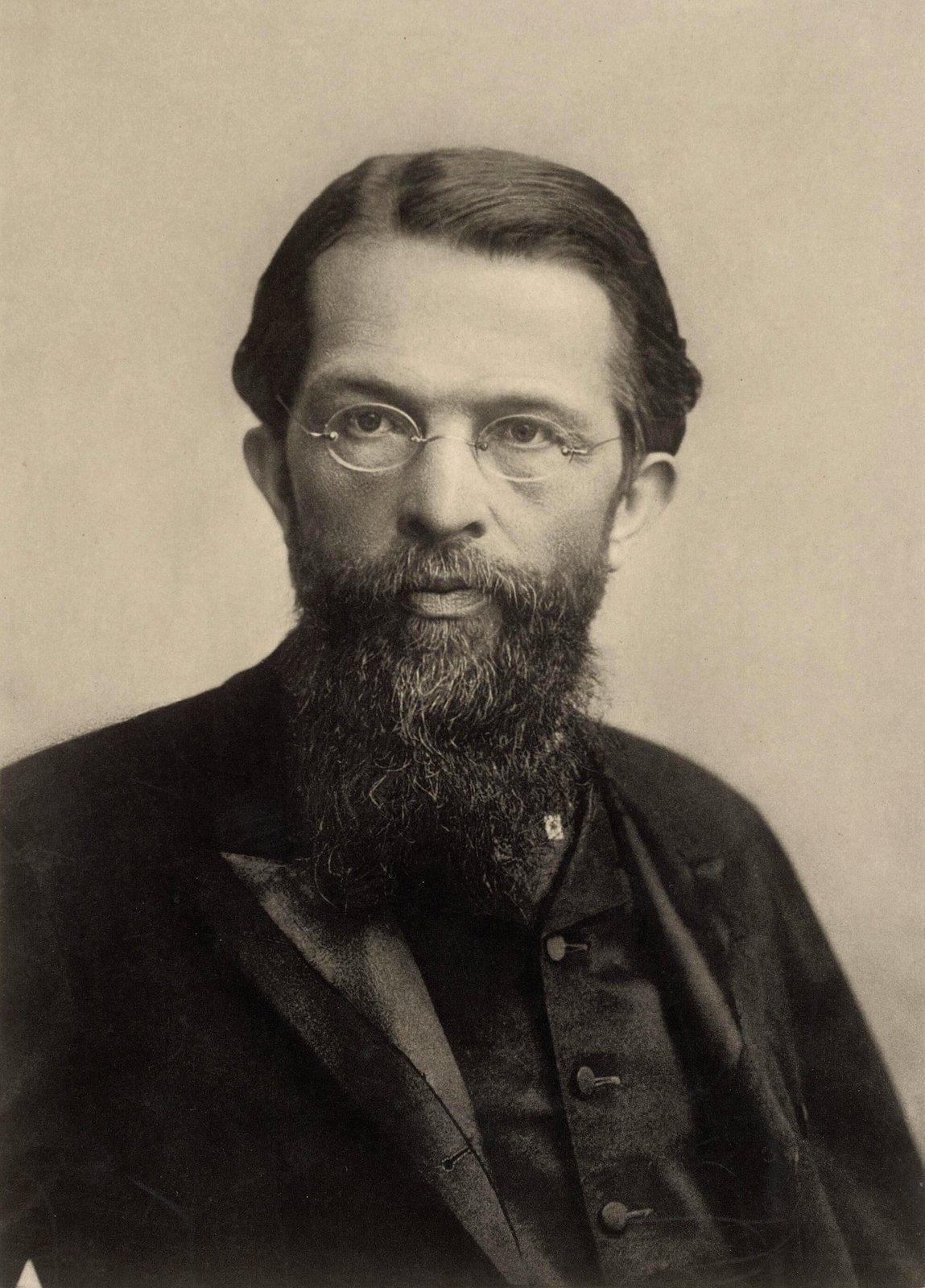
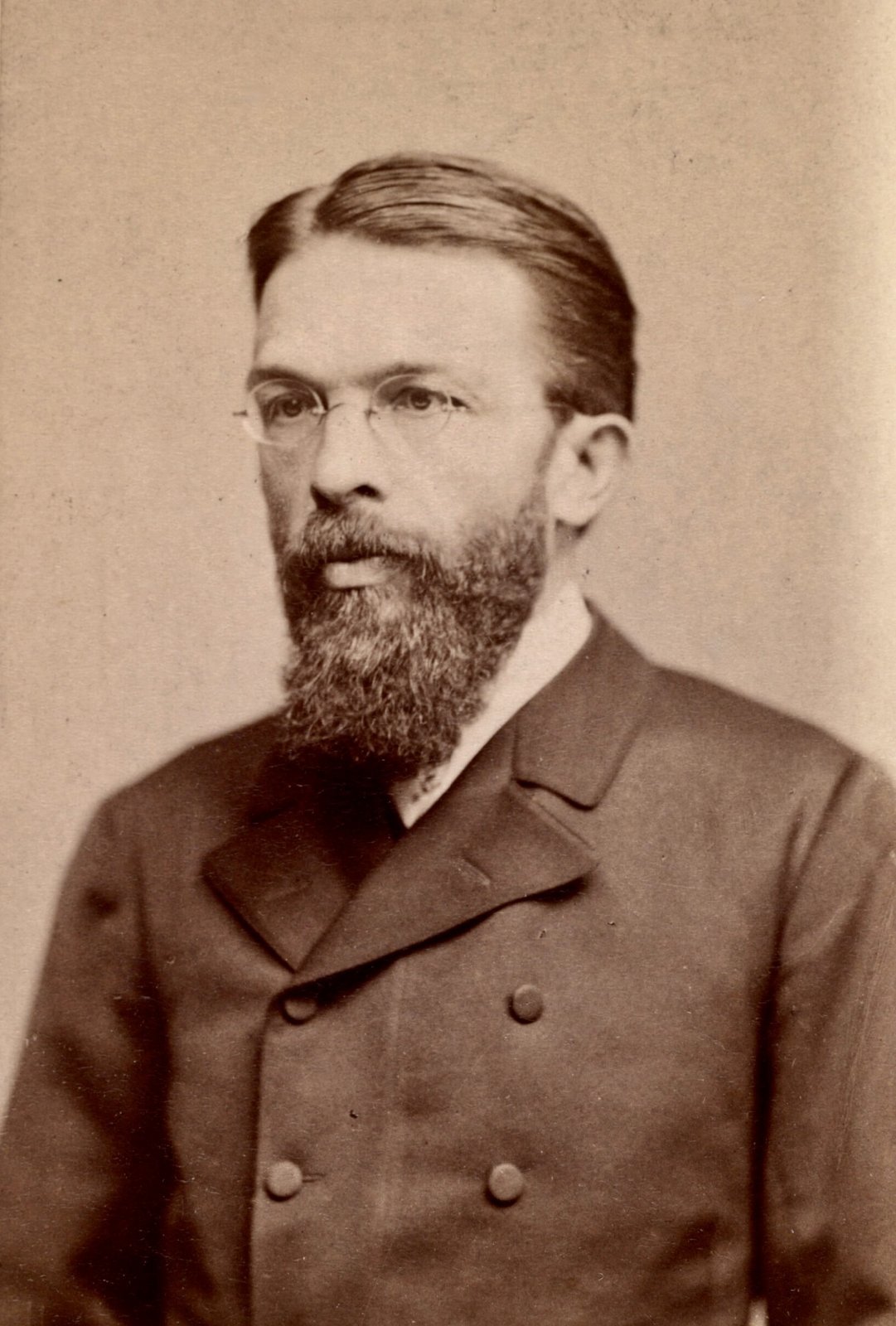
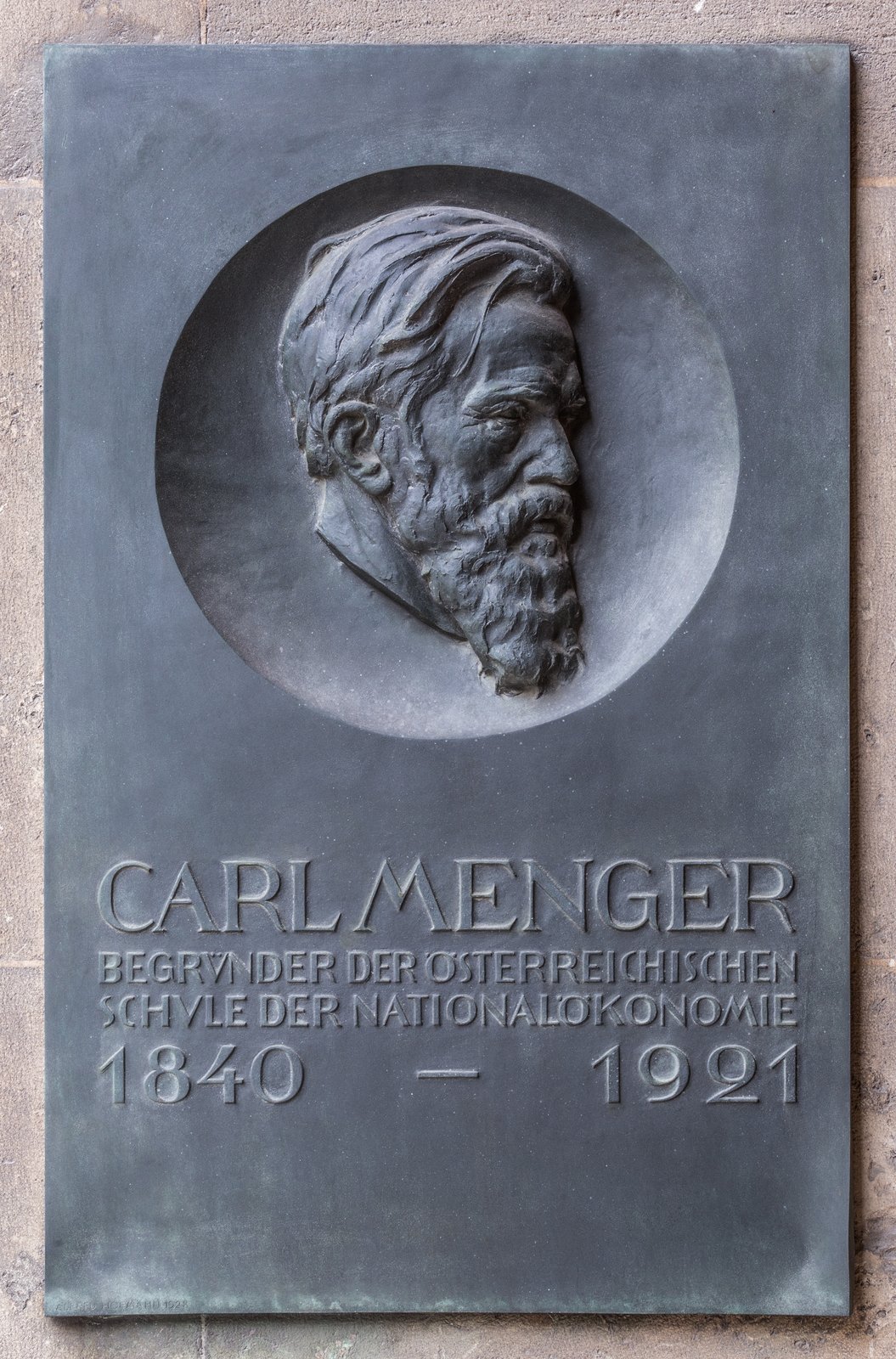
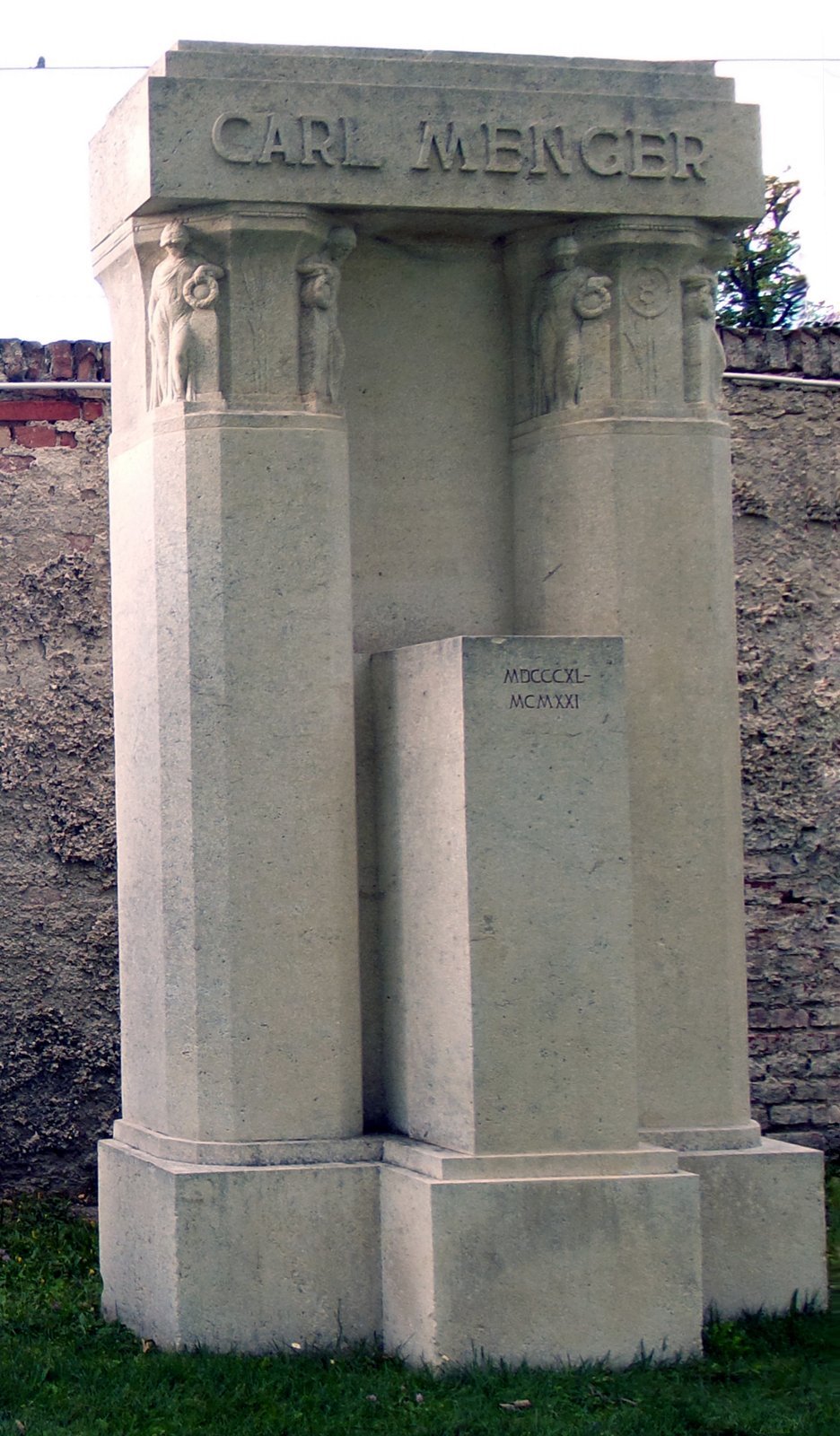
Portrait of Carl MengerPortrait of Carl Menger: Carl Menger, Portrait der ÖNB (Lichtdruck nach Foto) (1890)Portrait of Carl Menger: Mengers Ehrengrab am Wiener Zentralfriedhof (2014)
FOL. 01 · N° 001 · Carl Menger
BIOGRAPHY

Life and Work

Far from the metropolis of Vienna, in the unremarkable small Galician town of Neu Sandez (today Nowy Sącz, Poland), Carl Menger was born on Sunday, 23 February 1840, the third of ten children. The sparse biographical records that survive show a childhood overshadowed by grave misfortune and suffering. Carl lost four siblings and, in 1848, his father as well. The result was deprivation and hardship. He was an assertive, at times combative character, not readily prepared to yield before authority. During his studies he earned his living as a journalist in Lemberg (today Lviv), as a co-founder of the Wiener Tagblatt and as an editor of the Wiener Zeitung. After the publication of his Principles of Economics, Menger obtained his habilitation in Political Economy at the University of Vienna in June 1872. Only a year later he was granted an associate professorship. Until his death on 26 February 1921, he lived with his family in the 9th district of Vienna, surrounded by a library that ultimately comprised 25,000 volumes.
Metadata
23. Februar 1840
26. Februar 1921
in Wien
Generation 1
The Podcast

The episode on Carl Menger

Carl Menger in audio: the life, the one idea, the most famous argument, and which work to read first. About 17 minutes.

0:00–:––

New episodes appear continually. The newsletter will let you know when the next one is out.

Life stations

Stations

  1. 1840
    1840
    Birth

    Born on 23 February 1840 in Neu Sandez (Galicia, today Nowy Sącz, Poland), the third of ten children.[1]

  2. 1848
    1848
    Death of the Father

    At the age of eight, Menger lost his father; four of his siblings had already died before then. For the family, the result was deprivation and hardship.

  3. ⁦1859–1860⁩
    ⁦1859–1860⁩
    Studies at the University of Vienna

    Began his studies in law and political science at the University of Vienna.[1]

  4. ⁦1860–1863⁩
    ⁦1860–1863⁩
    Studies at the University of Prague

    Continued his studies at the University of Prague from 1860 to 1863.[1]

  5. ⁦1860–1867⁩
    ⁦1860–1867⁩
    Studies and Journalism in Lemberg (today Lviv)— inferred

    During his studies, Menger earned his living as a journalist in Lemberg.

  6. 1867
    1867
    Co-founder of the Wiener Tagblatt— inferred

    Menger was a co-founder of the Wiener Tagblatt and later worked as an editor at the Wiener Zeitung.

  7. 1867
    1867
    Doctorate in Law (Dr. jur.)

    Doctorate in law at the Jagiellonian University in Kraków.[1]

  8. 1867
    1867
    Journalist, Lemberger Zeitung— approximate

    Worked as an editor at the Lemberger Zeitung after completing his doctorate.[1]

  9. 1871
    1871
    “Principles of Economics”

    Publication of the “Principles”, the founding work of the Austrian School. The habilitation followed immediately afterwards.[1]

  10. 1871
    1871
    Editorial Secretary, Wiener Zeitung— approximate

    Editorial secretary of the Wiener Zeitung; observer and market analyst of the Vienna Stock Exchange.[9]

  11. 1872
    1872
    Habilitation in Political Economy

    Habilitation in political economy at the University of Vienna in June 1872.[1]

  12. 1873
    1873
    Associate Professorship

    Just a year after his Habilitation, Menger received an associate professorship at the University of Vienna.[1]

  13. ⁦1876–1878⁩
    ⁦1876–1878⁩
    Tutor to Crown Prince Rudolf

    Appointed in 1876 as one of the tutors to Crown Prince Rudolf; in 1877 and 1878 Menger accompanied him on study tours through Europe.[1]

  14. 1879
    1879
    Full Professor

    Promotion to full professor of political economy at the University of Vienna.[1]

  15. 1883
    1883
    “Investigations into the Method of the Social Sciences”

    Publication of the “Investigations”; the trigger for the Methodenstreit with Gustav Schmoller and the German Historical School.[7]

  16. 1900
    1900
    Life Member of the Herrenhaus

    Appointment as a life member of the Austrian Herrenhaus (House of Lords).[1]

  17. 1903
    1903
    Emeritus Status

    Early retirement (emeritus status) from the University of Vienna for health reasons.[7]

  18. 1921
    1921
    Death

    Died on 26 February 1921 in Vienna, in the 9th district, surrounded by a library of some 25,000 volumes.[1]

Relationships

Influences

Influenced by · 1
  1. 1883
    1883
    Gustav von Schmoller⁦(1838–1917)⁩ · Jüngere Historische Schule

    With the “Investigations into the Method of the Social Sciences” (1883), Menger set off the Methodenstreit with Schmoller and the German Historical School; Schmoller's dismissive review first mocked Menger's followers as the “Austrian School”.[1]

Influenced · 12
  1. ⁦1876–1878⁩
    ⁦1876–1878⁩
    Rudolf von Habsburg⁦(1858–1889)⁩

    From 1876, for two years, Menger taught Crown Prince Rudolf von Habsburg political economy and statistics and accompanied him on his travels.[1]

  2. ⁦1884–1887⁩
    ⁦1884–1887⁩

    Studied law from 1884 to 1887 at the University of Innsbruck, among others under Carl Menger.

  3. 1885
    1885

    After his law studies, he completed his Habilitation under Carl Menger.

  4. ⁦1887–1887⁩
    ⁦1887–1887⁩

    In 1887 Carl Menger supervised the doctorate of Ernst Seidler von Feuchtenegg to the degree of Dr. jur. at the University of Vienna.[2]

  5. 1887
    1887

    Wilhelm Rosenberg was a student of Carl Menger in Vienna.[8]

  6. ⁦1889–1899⁩
    ⁦1889–1899⁩

    He studied law at the universities of Czernowitz and Vienna and is explicitly described in the biography as a pupil of Menger.[3]

  7. ⁦1890–1895⁩
    ⁦1890–1895⁩

    From 1890 studied history, law and economics at the University of Vienna and attended Carl Menger's lectures on economics; adopted his insistence on the exact definition of concepts and causal investigation.[13]

  8. ⁦1899–1899⁩
    ⁦1899–1899⁩

    "Favourite student" and last Habilitation candidate of Carl Menger; studied economics and law at the University of Vienna.

  9. 1903
    1903

    Only reading Menger's “Grundsätze” offered Wieser the perspective he had been seeking, which in retrospect he experienced as a liberation from the “distress of thinking”.[4]

  10. ⁦1904–1904⁩
    ⁦1904–1904⁩

    Earned his doctorate in 1904 at the Faculty of Law and Political Sciences of the University of Vienna under Carl Menger and Eugen von Philippovich.[6]

  11. Ludassy was one of the most outstanding pupils in Carl Menger's seminar for graduates who were already in professional life and interested in economics.

  12. Wikipedia DE bestätigt: Landesberger gehörte zur Österreichischen Schule und war Schüler Carl Mengers an der Universität Wien.[11]

Private seminar, colleagues, Mont Pèlerin · 2
  1. Sax was at first a rival, later an ally of Menger in the Methodenstreit, but distanced himself again from the Austrian School a few years after 1887.

  2. Groß wurde von Menger bei der Aufzählung seiner Habilitanten anlässlich seiner Emeritierung nicht erwähnt – ein zwiespältiges Verhältnis trotz formaler Verbindung über die Wiener Habilitation.[5]

Carl Menger in the context of the School as a whole: five generations, their teacher-student lineages, circles and collegial ties.

SOURCES ON STATIONS AND RELATIONSHIPS33 citations · 6 sources
  • [12]Ludwig von Mises: Nachruf auf Julius Landesberger (Wiener Universität 1921)
Topography

Places of Activity

CATALOGUE OF WORKS · CHRONOLOGICAL

The Books

1860s
1867
Doktoratsurkunde Rechtswissenschaft Krakau
OriginalGerman
1870s
1871
Grundsätze der Volkswirthschaftslehre
OriginalGerman
1880s
1880
Grundzüge einer Klassifikation der Wirtschaftswissenschaften
OriginalGerman
1883
Die Irrtümer des Historismus in der deutschen Nationalökonomie
OriginalGerman
Untersuchungen über die Methode der Socialwissenschaften und der Politischen Ökonomie insbesondere
OriginalGerman
Further editions
  • Investigations into the Method of the Social Sciences
    OriginalEnglish
1887
Gesammelte Werke [F.A.v.Hayek, Hrsg.]
OriginalGerman
1930s
1935
Carl Menger's collected shorter writings on the method and history of economics bring together ten works published between 1884 and 1915. At their core stand Menger's interventions in the Methodenstreit against Gustav Schmoller, above all the polemic written in sixteen letters, “Die Irrthümer des Historismus in der deutschen Nationalökonomie” (The Errors of Historicism in German Economics), in which he defends the separation of theoretical, practical and historical research and rejects historicism as one-sided. A detailed review of Schönberg's “Handbuch der politischen Ökonomie” (Handbook of Political Economy) and the essays “Zur Theorie des Kapitals” (On the Theory of Capital) and “Grundzüge einer Klassifikation der Wirtschaftswissenschaften” (Outline of a Classification of the Economic Sciences) develop Menger's concept of exact economics, his real conception of capital and his system of the economic sciences. The collection closes with five biographical essays on Friedrich List, Lorenz von Stein, Wilhelm Roscher, John Stuart Mill and Eugen von Böhm-Bawerk.
OriginalGerman
1936
The volume gathers Carl Menger's writings on monetary theory and on the Austro-Hungarian currency reform. Its theoretical core is the article 'Geld' (Money) from the Handwörterbuch der Staatswissenschaften (1909), which explains the origin of generally accepted media of exchange from the differing marketability of goods and defines money as a commodity whose distinctive character lies in its function as a medium of exchange. The remaining works deal with the currency reform of 1892: the purchasing power of the silver gulden, the question of the ratio in the transition to a gold currency, the danger of a gold agio, and Menger's statements before the Currency Enquiry Commission. Menger argues against an overly heavy gold crown and for a 'just gulden' without any shift in wealth. A complete catalogue of Menger's writings concludes the volume.
OriginalGerman
1960s
1963
Anmerkungen zu den „Grundsätzen der Volkswirtschaftslehre“
OriginalGerman
1970s
1970
Gesammelte Werke III
OriginalGerman
Gesammelte Werke IV
OriginalGerman
1980s
1981
Principles of economics
OriginalEnglish
ARTICLES · 26 CATALOGUED

Essays, Reviews, Lectures

1880s
1887
Gutachten der Professoren Dr. Exner und Dr. Karl Menger über die Studienreform im allgemeinen
OriginalGerman
Zur Kritik der Politischen Ökonomie
OriginalGerman
1888
Contribution a la Theorie du capital
OriginalFrench
Zur Theorie des Kapitals
OriginalGerman
1889
Grundzge einer Klassifikation der Wirtschaftswissenschaften
OriginalGerman
Zum hundertjährigen Geburtstag von Friedrich List
OriginalGerman
1890s
1891
Lorenz von Stein
OriginalGerman
1892
Der Gesetzentwurf betreffend die Feststellung der Kronenwährung in Österreich-Ungarn
OriginalGerman
Der Übergang zur Goldwährung. Untersuchungen über die Wertprobleme der österreichisch-ungarischen Valutareform
OriginalGerman
Die Valutaregulierung in Österreich Ungarn
OriginalGerman
Geld
OriginalGerman
La Monnaie Mesure de Valeur
OriginalFrench
Mündliches Gutachten vor der Währungs-Enquete-Commission
OriginalGerman
On the Origin of Money
OriginalEnglish
Von unserer Valuta
OriginalGerman
1893
Das Goldagio und der heutige Stand der Valutareform
OriginalGerman
Vorwort zu: E. Lorini, La Questione della Valuta in Austria-Ungeria
OriginalGerman
1896
Vorwort zu: G. Montemartini, Il Risparmio nella Economia Pura
OriginalGerman
1897
Ein Gesetz gegen Kartelle
OriginalGerman
Geld und Münzwesen seit 1857
OriginalGerman
1900s
1900
Geld, 2. Aufl.
OriginalGerman
1904
Mündliches Gutachten über die Reform der Gebäudesteuer
OriginalGerman
1905
Vorwort zu: M. Ettinger, Die Regelung des Wettbewerbes
OriginalGerman
1909
Geld, 3. Aufl.
OriginalGerman
1910s
1915
Carl Menger's obituary of Eugen von Böhm-Bawerk (1851 to 1914), published in 1915 in the Almanac of the Imperial Academy of Sciences in Vienna and expanded here with notes from Schumpeter's writings. The first part traces his life: studies in Vienna, his Habilitation in 1880, a professorship in Innsbruck, several terms as Austrian Minister of Finance, and finally President of the Academy. The second part pays tribute to his scholarly work, from his first publication "Rechte und Verhältnisse" (Rights and Relationships), through the "Theorie des Güterwertes" (Theory of the Value of Goods), to his principal work "Geschichte und Theorie des Kapitalzinses" (History and Theory of Capital Interest). Menger summarizes the positive theory of interest briefly (psychological and technical reasons for preferring present goods over future ones) and sets the at times fierce international criticism in context, without regarding it as diminishing Böhm-Bawerk's significance.
1970s
1973
Austrian Marginalism and mathematical Economics
OriginalEnglish
APA
Chicago
German historical style