FOLIO I · THINKER · GEN. 03 · N° 062

Else Cronbach

Works
3
Articles
0
Generation
3.
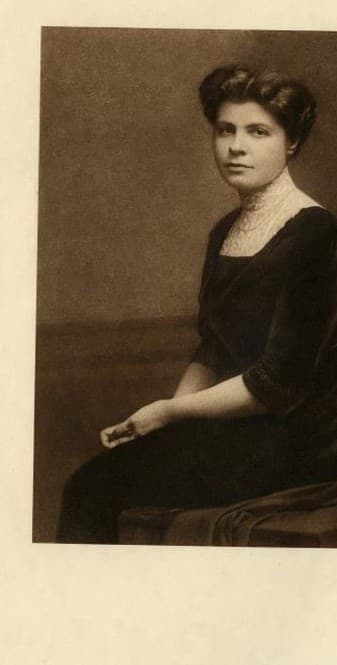
Portrait of Else Cronbach
FOL. 03 · N° 062 · Else Cronbach
BIOGRAPHY

Life and Work

Else Cronbach was born on 25 October 1879 in Berlin and grew up in a family of the Viennese middle class. When, around the turn of the century, she wished to take up the study of economics, women in Austria were not yet admitted to regular enrolment at the faculty of law and political science. She made do with the path then customary for women: she attended lectures as a guest auditor at the University of Vienna, among others by Eugen Philippovich von Philippsberg, the statistician Karl Theodor von Inama-Sternegg, Friedrich Wieser and Eugen von Böhm-Bawerk, and had to obtain her doctorate at a German university. Her doctorate was awarded in Freiburg im Breisgau, probably in 1907; in the same year her best-known work appeared, "Die österreichische Spitzenhausindustrie. Ein Beitrag zur Frage der Hausindustriepolitik" (The Austrian Lace Cottage Industry: A Contribution to the Question of Cottage-Industry Policy). To this day the study is a central source for the history of the Imperial-Royal Institute for Women's Cottage Industry in Vienna, and, taking lace production as its example, it treats the economic and social-policy situation of women's home work in the late Habsburg monarchy. With this work Cronbach is regarded as the first Austrian woman to hold a doctorate in the field of political science. After returning to Vienna she worked as secretary of the Lower Austrian Chamber of Commerce and Trade and, from 1911, took on additional duties in the body of the Vienna merchants' association. Alongside this she taught at a school for women's commercial education and was active in social-policy associations, above all on the housing question and the protection of workers. In her field, her focus shifted increasingly after 1908 from cottage industry to customs and trade-treaty policy, a highly political field for the multinational Danube monarchy; in 1912 she wrote an influential report for the Central Association of Austrian Merchants in preparation for the next trade treaties. Cronbach did not belong to the actual Mises Circle or the Geistkreis (both circles formed only after her death), but as a student of Philippovich, Wieser, Böhm-Bawerk and Inama-Sternegg she was firmly anchored, in personnel and in subject matter, in the second and third Viennese generation. Together with Helene Lieser and Stephanie Martha Braun she is among the very few women who became visible in Viennese economics before 1914. Her early death on 13 April 1913 in Vienna, which the sources describe as "sudden", without further detail, ended a career that, judging by her list of works, had been heading towards a significant role in Austrian trade and social policy.
Metadata
25. Oktober 1879
in Berlin, Deutsches Reich
13. April 1913
in Wien, Österreich-Ungarn
Generation 3
Life stations

Stations

  1. null
    null
    Hospitantin Nationalökonomie

    Besuch von Vorlesungen an der rechts- und staatswissenschaftlichen Fakultät der Universität Wien bei Philippovich, Inama-Sternegg, Wieser und Böhm-Bawerk; reguläres Studium für Frauen damals noch nicht möglich.

  2. ⁦null–1907⁩
    ⁦null–1907⁩
    Dr. rer. pol. Universität Freiburg

    Promotion an der Albert-Ludwigs-Universität Freiburg im Breisgau, da österreichische Universitäten Frauen das Doktorat in Staatswissenschaften noch verwehrten. Erste promovierte Österreicherin im Fach Staatswissenschaften.

  3. 1907
    1907
    Sekretärin Handels- und Gewerbekammer

    Wissenschaftliche Sekretärin der Niederösterreichischen Handels- und Gewerbekammer in Wien; Schwerpunkt Zoll- und Handelsvertragspolitik.

  4. ⁦1911–1913⁩
    ⁦1911–1913⁩
    Gremium der Wiener Kaufmannschaft

    Tätig im Gremium der Wiener Kaufmannschaft; daneben Lehrtätigkeit an einer Schule für kommerzielle Frauenbildung und Engagement in sozialpolitischen Vereinen zu Wohnungsfrage und Arbeiterschutz.

  5. 1913
    1913
    Tod in Wien

    Gestorben am 13. April 1913 in Wien, im Alter von 33 Jahren. Die Quellen sprechen von einem „plötzlichen Tod“, ohne nähere Ursache.

Relationships

Influences

Influenced by · 4
  1. Cronbach attended Philippovich's lectures on economics at the University of Vienna as a guest auditor. Philippovich's social-policy orientation probably helped shape her later interest in cottage industry and labour protection.

  2. Cronbach attended the lectures of the statistician and economic historian Inama-Sternegg in Vienna. His historical-statistical approach is reflected in her empirical work on the lace cottage industry.

  3. Cronbach attended Wieser's lectures at the University of Vienna.

  4. Cronbach also attended Böhm-Bawerk's lectures in Vienna and thus belongs, in personal terms, to the third generation of the Austrian School.

Else Cronbach in the context of the School as a whole: five generations, their teacher-student lineages, circles and collegial ties.

CATALOGUE OF WORKS · CHRONOLOGICAL

The Books

1900s
1907
Die österreichische Spitzenhausindustrie. Ein Beitrag zur Frage der Hausindustriepolitik
OriginalGerman
1908
Zur Frage des landwirtschaftlichen Gross- und Kleinhandels
OriginalGerman
1910s
1912
Bericht des Zentralverbandes österreichischer Kaufleute über die Stellung der Kaufmannschaft zur Vorbereitung der Handelsverträge
OriginalGerman
APA
Chicago
German historical style