FOLIO I · THINKER · GEN. 04 · N° 009

Fritz Machlup

Works
53
Articles
40
Generation
4.
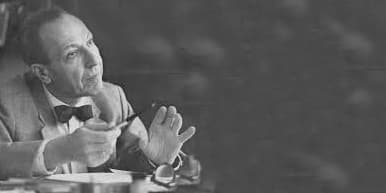
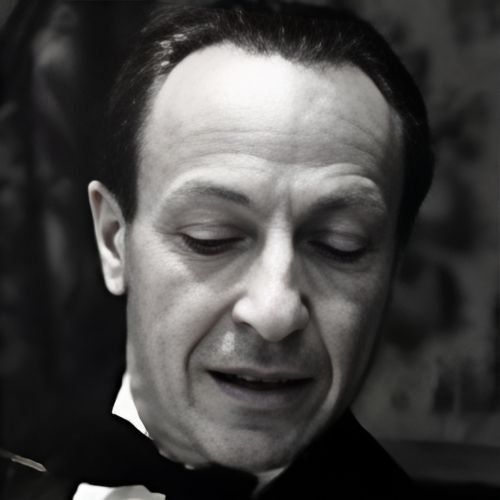
Portrait of Fritz MachlupPortrait of Fritz Machlup: Fritz Machlup, Portrait (Austrian Economics Center)
FOL. 04 · N° 009 · Fritz Machlup
BIOGRAPHY

Life and Work

The son of a Jewish businessman, he grew up in Wiener Neustadt and, alongside his work in his parents' cardboard factory, studied political science in Vienna, completing his doctorate under Ludwig von Mises with 'Die Goldkernwährung' (1925) (The Gold-Exchange Standard). Besides his business activity he took part regularly in Mises's private seminar and published reviews, essays, books and more than 150 newspaper articles. In addition, this restless and prolific worker served as a board member of the Austrian Cardboard Cartel as well as of the Nationalökonomische Gesellschaft (Economics Society) and taught from 1929 to 1933 at the Ottakring adult education college. With 'Börsenkredit, Industriekredit und Kapitalbildung' (1931) (Stock-Exchange Credit, Industrial Credit and Capital Formation), a solid analysis of stock-exchange financing in the light of Austrian monetary theory, Machlup originally intended to gain his habilitation, but the professors Spann and Degenfeld-Schonburg informed him that his application for habilitation would not be put to a vote on account of his Jewish descent. Nor was Hans Mayer willing to support a student of Mises. Machlup consequently left the country in 1933 and in 1934 became a visiting professor at Harvard University. A year later he sold his shares in his factory in the Ybbs valley in Lower Austria and emigrated for good to the United States. During the war he stood by many people under threat in Austria and helped them to leave the country or to flee. In the United States Machlup continued his academic career at various universities. He concerned himself above all with international monetary problems, questions of competition and the forms of the market, and laid the foundations for an economic theory of knowledge. In 1966 he was elected president of the American Economic Association. Fritz Machlup was always described as an exceptional personality. He won people over with his agility, his intellectual clarity, his wit and his great gifts as a teacher. Visibly taken with this bundle of energy from Wiener Neustadt, an American student was moved to the pun: Mach 1, Mach 2, Mach 3, Machlup.
Metadata
15. Dezember 1902
30. Januar 1983
in Princeton, New Jersey
Generation 4
Life stations

Stations

  1. 1902
    1902
    Birth

    Born on 15 December 1902 in Wiener Neustadt, the son of a Jewish industrialist; he grew up there at his parents' cardboard factory.

  2. ⁦1920–1923⁩
    ⁦1920–1923⁩
    Studies in Political Science in Vienna

    Studied political science in Vienna alongside his work in the family cardboard factory.

  3. 1923
    1923
    Doctorate under Ludwig von Mises

    Received a doctorate (Dr. rer. pol.) at the University of Vienna in 1923 under Ludwig von Mises (dissertation "Die Goldkernwährung" [The Gold Bullion Standard], published 1925).[5]

  4. 1925
    1925
    "Die Goldkernwährung" (The Gold Bullion Standard)

    Publication of the doctoral dissertation "Die Goldkernwährung" (The Gold Bullion Standard) in 1925 (the doctorate, Dr. rer. pol., had already been obtained in 1923 under Mises).

  5. 1925
    1925
    Mises Private Seminar and the Economic Society— inferred

    Took part regularly in the Mises private seminar, published reviews, essays, books, and more than 150 newspaper articles, and served as a board member of the Austrian Cardboard Cartel and of the Economic Society.

  6. ⁦1929–1933⁩
    ⁦1929–1933⁩
    Teaching at the Volkshochschule Ottakring

    Taught from 1929 to 1933 at the Volkshochschule Ottakring (an adult education centre).

  7. 1931
    1931
    "Börsenkredit, Industriekredit und Kapitalbildung" (Stock-Exchange Credit, Industrial Credit and Capital Formation)

    Publication of "Börsenkredit, Industriekredit und Kapitalbildung" (Stock-Exchange Credit, Industrial Credit and Capital Formation; 1931), an analysis of stock-exchange financing in the light of Austrian monetary theory. Intended as a Habilitation thesis, but the professors Spann and Degenfeld-Schonburg informed him that his application for Habilitation would not be put to a vote on account of his Jewish descent; Hans Mayer, too, was unwilling to support a student of Mises.

  8. 1933
    1933
    Leaves Austria

    Left the country in 1933 following the failed Habilitation on account of his Jewish descent.

  9. ⁦1933–1935⁩
    ⁦1933–1935⁩
    Rockefeller Fellowship, USA

    Research fellow of the Rockefeller Foundation in the USA from 1933 to 1935.[5]

  10. 1934
    1934
    Visiting Professorship at Harvard University

    Became a visiting professor at Harvard University in 1934.

  11. 1935
    1935
    Final Emigration to the USA

    In 1935 he sold his shares in the factory in the Lower Austrian Ybbs Valley and emigrated for good to the USA. During the war he helped numerous people in distress in Austria to leave the country and flee.

  12. ⁦1935–1947⁩
    ⁦1935–1947⁩
    Frank H. Goodyear Professor, University at Buffalo

    Taught from 1935 to 1947 as Frank H. Goodyear Professor at the University at Buffalo.[5]

  13. 1940
    1940
    US Citizenship

    Took US citizenship in 1940.[6]

  14. ⁦1947–1960⁩
    ⁦1947–1960⁩
    Abram G. Hutzler Professor, Johns Hopkins University

    Taught from 1947 to 1960 as Abram G. Hutzler Professor at Johns Hopkins University in Baltimore.[5]

  15. ⁦1960–1971⁩
    ⁦1960–1971⁩
    Walker Professor at Princeton University

    Taught at Princeton University from 1960 to 1971 as Walker Professor of Economics and International Finance.[5]

  16. 1961
    1961
    American Academy of Arts and Sciences

    Elected to the American Academy of Arts and Sciences in 1961.[7]

  17. 1962
    1962
    "The Production and Distribution of Knowledge in the United States"

    Publication of his principal work, "The Production and Distribution of Knowledge in the United States" (1962), which coined the concept of the information society.[5]

  18. 1963
    1963
    American Philosophical Society

    Elected to the American Philosophical Society in 1963.[8]

  19. 1966
    1966
    President of the American Economic Association

    Elected President of the American Economic Association in 1966.

  20. ⁦1971–1974⁩
    ⁦1971–1974⁩
    President of the International Economic Association

    President of the International Economic Association from 1971 to 1974.[9]

  21. ⁦1971–1983⁩
    ⁦1971–1983⁩
    Professorship at New York University

    Taught as a professor at New York University from 1971 until his death in 1983.[5]

  22. 1978
    1978
    Grand Silver Decoration of Honour with Star for Services to the Republic of Austria

    Received the Grand Silver Decoration of Honour with Star for Services to the Republic of Austria in 1978.[10]

  23. 1983
    1983
    Death

    Died on 30 January 1983 in Princeton, New Jersey, at the age of 80.

Relationships

Influences

Influenced by · 5
  1. ⁦1920–1923⁩
    ⁦1920–1923⁩

    From 1920 studied economics at the University of Vienna, among others under Friedrich von Wieser.[5]

  2. ⁦1923–1934⁩
    ⁦1923–1934⁩

    Machlup was a regular participant in Mises' private seminar and an intellectual student from the Viennese circle.[1]

  3. 1931
    1931
    Ferdinand Degenfeld-Schonburg⁦(1882–1952)⁩ · Wiener Sozialwissenschaft

    The professors Spann and Degenfeld-Schonburg informed Machlup that his application for Habilitation would not be put to a vote because of his Jewish descent.

  4. 1931
    1931
    Othmar Spann⁦(1878–1950)⁩ · Universalismus

    The professors Spann and Degenfeld-Schonburg informed Machlup that his application for Habilitation would not be put to a vote because of his Jewish descent.

  5. mises.org-Strigl-Biographie nennt Machlup explizit unter den Strigl geprägten Schülern der vierten Wiener Generation.[2]

Private seminar, colleagues, Mont Pèlerin · 5
  1. ⁦1929–1934⁩
    ⁦1929–1934⁩

    Beide Teilnehmer am Mises-Privatseminar; mises.org-Liste führt Machlup und Morgenstern als regelmäßige Teilnehmer.[3]

  2. 1932
    1932

    In a letter of 1932 Kauder described Machlup as a “diverse representative” of the Austrian School.[4]

  3. 1947
    1947

    Hayek und Machlup gehörten beide zur Gründungsversammlung der Mont Pèlerin Society 1947; Wikipedia EN führt Machlup in der Kategorie „Members of the Mont Pelerin Society".

  4. ⁦1947–1934⁩
    ⁦1947–1934⁩

    He regularly took part in the Mises-Privatseminar, alongside his business activity in his parents' cardboard factory.[1]

  5. Both participants in the Mises-Privatseminar in Vienna.[3]

Fritz Machlup in the context of the School as a whole: five generations, their teacher-student lineages, circles and collegial ties.

SOURCES ON STATIONS AND RELATIONSHIPS19 citations · 3 sources
Topography

Places of Activity

CATALOGUE OF WORKS · CHRONOLOGICAL

The Books

1920s
1925
Die Goldkernwährung
OriginalGerman
1927
Die neuen Währungen in Europa
OriginalGerman
1930s
1931
Börsenkredit, Industriekredit und Kapitalbildung
OriginalGerman
Further editions
  • The Stock Market, Credit and Capital Formation1940
    OriginalEnglish
1934
Führer durch die Krisenpolitik
OriginalGerman
1940s
1943
International Trade and the National Income Multiplier
OriginalEnglish
1945
A Cartel Policy for the United Nations [Corvin D. Edwards, ed.]
OriginalEnglish
Financing American Prosperity [editor with Paul T. Homan]
OriginalEnglish
1946
Marginal Analysis and Empirical Research
OriginalEnglish
1949
The Basing-Point System
OriginalEnglish
1950s
1952
The Economics of Sellers‘ Competition
OriginalEnglish
Further editions
  • Wettbewerb im Verkauf: Modellanalyse des Anbieterverhaltens
    OriginalGerman
The Political Economy of Monopoly
OriginalEnglish
1958
An Economic Review of the Patent System (1958) is Study No. 15, which Fritz Machlup prepared for the Patent Subcommittee of the US Senate. It brings together more than a century of economic writing on patents and arranges it systematically rather than chronologically. A historical part traces the spread of patents, the anti-patent movement (1850–1873) and the later victory of the patent advocates; an institutional part covers the requirements for patent protection, the abuse of the patent monopoly, compulsory licences and international patent relations. Most of the space goes to economic theory: Machlup examines the four classical justifications (natural law, reward through monopoly, the monopoly-profit incentive, and exchange for disclosure) and works with the concepts of private and social costs and values. His conclusion is deliberately open: on the basis of what was known at the time, neither the introduction nor the abolition of the patent system can be clearly justified; only judgements about gradual reforms are more reliable.
OriginalEnglish
Further editions
  • Die wirtschaftlichen Grundlagen des Patentrechts
    OriginalGerman
1960s
1960
Der Wettstreit zwischen Mikro- und Makrotheorien
OriginalGerman
Further editions
  • Micro- and Macro-Economics: Contested Boundaries and Claims of Superiority
    OriginalEnglish
1962
Plans for Reform of the International Monetary System
OriginalEnglish
Further editions
  • Die Pläne zur Reform des internationalen Geldwesens
    OriginalGerman
Fritz Machlup's 1962 study is the first to measure systematically the economic scale of knowledge production in the United States. Machlup defines "knowledge" very broadly (anything that someone knows) and "production of knowledge" as any activity through which someone learns something previously unknown, so that creating, communicating and distributing coincide. After a conceptual clarification (Chapters I-III), he estimates the expenditure of five major knowledge industries: education, research and development, communication media (print, film, broadcasting, telephone, postal services), information machines and information services. Drawing on 84 statistical tables, he calculates for 1958 a knowledge expenditure of around 29 per cent of the adjusted gross national product and shows that this share has grown strongly since 1900. The closing chapter traces in parallel the shift in the occupational structure towards knowledge-producing work. Methodologically, the work combines national income accounting with a classification of types of knowledge and closes with a proposal for school reform.
OriginalEnglish
1963
Essays in Economic Semantics
OriginalEnglish
1964
International Monetary Arrangements: The Problem of Choice [editor with Burton G. Malkiel]
OriginalEnglish
International Payments, Debts, and Gold
OriginalEnglish
1965
Die Hochschulausbildung im volkswirtschaftlichen Kalkül
OriginalGerman
Involuntary Foreign Lending
OriginalEnglish
1966
Maintaining and Restoring Balance in International Payments [with William Fellner, Robert Triffin, and eleven others]
OriginalEnglish
Wettbewerb im Verkauf. Modellanalyse des Anbieterverhaltens
OriginalGerman
1968
Remaking the International Monetary System: The Rio Agreement and Beyond
OriginalEnglish
1969
Economic Means and Social Ends: Essays in Political Economics [with Adolf Lowe et al., Robert L. Heilbronner, ed.]
OriginalEnglish
Roads to Freedom: Essays in Honor of Friedrich A. von Hayek [with Erich Streissler et al.]
OriginalEnglish
1970s
1970
Approaches to Greater Flexibility of Exchange Rates: The Bürgenstock Papers [with C. Fred Bergsten et al., George N. Halm, ed.]
OriginalEnglish
Education and Economic Growth
OriginalEnglish
1971
Chishiki Sangyo no Kozo [The Structure of the Knowledge Industry]
Gendai Keizaigaku no Tembo [Views on Selected Topics in Modern Economics]
The Book Value of Monetary Gold
OriginalEnglish
1972
International Mobility and Movement of Capital [Fritz Machlup, Walter Salant, and Lorie Tarshis, eds.]
OriginalEnglish
International Monetary Problems [with Armin Cutowski and A. Lutz]
OriginalEnglish
Optimum Social Welfare and Productivity [with Jan Tinbergen, Abram Bergson and Oskar Morgenstern]
OriginalEnglish
Reshaping the International Economic Order: A Tripartite Report by Twelve Economists [with C. Fred Bergsten et al.]
OriginalEnglish
The Alignment of Foreign Exchange Rates
OriginalEnglish
The production and distribution of knowledge in the United States
OriginalEnglish
1973
Hochschulbildung für jedermann: Eine Auseinandersetzung mit einem Gleichheitsideal
OriginalGerman
1974
Der Außenwert des Dollars: Zum Problem der Unterbewertung und Überbewertung einer Währung auf den Devisenmärkten
OriginalGerman
1975
International Monetary Systems
OriginalEnglish
1976
Economic integration worldwide regional sectoral proceedings of the fourth
OriginalEnglish
Essays on Hayek [with William F. Buckley, Jr. and five others, Fritz Machlup ed.]
OriginalEnglish
Selected economic writings of Fritz Machlup
OriginalEnglish
1977
A History of Thought on Economic Integration
OriginalEnglish
1978
Information though the printed word The Dissemination of Scholarly
OriginalEnglish
1980s
1981
Knowledge: Its Creation, Distribution and Economic Significance, Volume I: Knowledge and Knowledge Production
OriginalEnglish
1982
Knowledge: Its Creation, Distribution and Economic Significance, Volume II: The Branches of Learning
OriginalEnglish
1984
Knowledge: Its Creation, Distribution and Economic Significance, Volume III: The Economics of Information and Human Capital
OriginalEnglish
2000s
2002
Börsenkredit Industriekredit und Kapitalbildung
OriginalGerman
ARTICLES · 40 CATALOGUED

Essays, Reviews, Lectures

1930s
1935
Inflation and Decreasing Costs of Production.
OriginalEnglish
1937
On the Meaning of the Marginal Product.
OriginalEnglish
1950s
1955
Characteristics and Types of Price Discrimination.
OriginalEnglish
1958
The Optimum Lag of Imitation Behind Innovation.
OriginalEnglish
1959
Why Not Hahnism?
OriginalEnglish
1960s
1960
Der Weltstreit zwischen Mikro- und Makrotheorien in der Nationalökonomie.
OriginalGerman
Erfindung und technische Forschung.
OriginalGerman
Monopol
OriginalGerman
1961
Oligopol
OriginalGerman
1962
Die Pläne zur Reform des internationalen Geldwesens
OriginalGerman
Patentwesen (I)
OriginalGerman
Patentwesen (II)
OriginalGerman
1963
Die Produktivität der naturwissenschaftlichen und technischen Forschung und Entwicklung
OriginalGerman
Polypol
OriginalGerman
Wettbewerb (III)
OriginalGerman
1964
International Economic Co-operation
OriginalEnglish
1965
Real Adjustment, Compensatory Corrections, and Foreign Financing of Imbalances in International Payments
OriginalEnglish
Strategies in the War on Poverty
OriginalEnglish
1966
International Monetary Systems and the Free Market Economy
OriginalEnglish
1968
Patents
OriginalEnglish
1969
If Matter Could Talk
OriginalEnglish
1970s
1971
Academic Freedom
OriginalEnglish
Changes in the International Monetary System and the Effects on Banks
OriginalEnglish
Financing, Correcting, and Adjustment: Three Ways to Deal with an Imbalance of Payments
OriginalEnglish
1972
Nationalism, Provincialism, Fixed Exchange Rates and Monetary Union
OriginalEnglish
The Universal Bogey
OriginalEnglish
1973
Internationale Liquidität
OriginalGerman
Learning More About Knowledge
OriginalEnglish
The Effects of Fiscal Policy and the Choice of Definitions
OriginalEnglish
The Expanded Role of SDRs and the Possibility of an SDR Standard
OriginalEnglish
1974
Integrationshemmende Integrationspolitik
OriginalEnglish
The Illusion of Universal Higher Education
OriginalEnglish
1975
International Monetary Systems
OriginalEnglish
1976
Between Outline and Outcome the Reform was Lost
OriginalEnglish
1977
Würdigung der Werke von Friedrich A. von Hayek
OriginalGerman
1980s
1980
Explaining Changes in Balances of Payments and Foreign-Exchange Rates: A Polemic without Graphs, Algebra, and Citations
OriginalEnglish
The Economic Cost of Knowledge
OriginalEnglish
1982
Austrian Economics
OriginalEnglish
Growth Rates, Trade Balances, and Exchange Rates
OriginalEnglish
Marginal Revenue
OriginalEnglish
APA
Chicago
German historical style