FOLIO I · THINKER · GEN. 04 · N° 046

Hans Sennholz

Works
47
Articles
24
Generation
4.
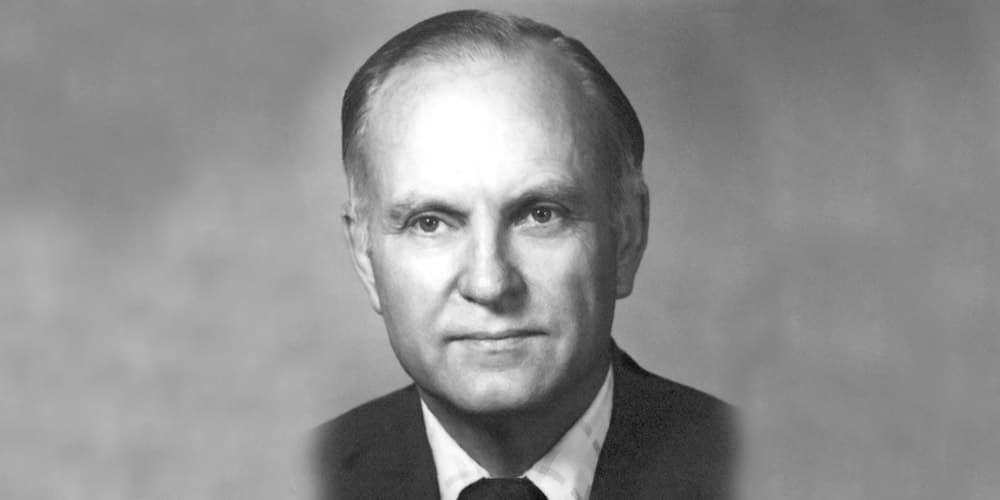
Portrait of Hans Sennholz
FOL. 04 · N° 046 · Hans Sennholz
BIOGRAPHY

Life and Work

Hans F. Sennholz studied at the University of Marburg (Diplom-Volkswirt) and the University of Cologne (Dr. rer. pol.). He then moved to the United States, where he had been held as a prisoner of war during the conflict, to begin Ph.D. studies at New York University. Sennholz was Ludwig von Mises's first PhD student in the United States. After completing his degree in 1955, he held a professorship at Grove City College in Pennsylvania from 1956 to 1992. From 1992 to 1997 he was president of the Foundation for Economic Education (FEE). Sennholz translated many of Mises's writings from German into English. Through his books, and above all through his numerous lectures, he contributed to the early dissemination of the Austrians' positions on monetary theory and monetary policy, and worked to build a bridge between economics and intellectual American Protestant circles.
Metadata
3. Februar 1922
23. Juni 2007
Generation 4
Life stations

Stations

  1. 1922
    1922
    Birth

    Born on 3 February 1922 in Bergkamen.

  2. ⁦1942–1945⁩
    ⁦1942–1945⁩
    Luftwaffe Pilot, Prisoner of War in the USA

    Luftwaffe pilot (Messerschmitt Bf 109) in the Second World War; shot down over North Africa on 31 August 1942 and subsequently held as a US prisoner of war until the end of the war (latterly on a farm in Wilson, Arkansas). Iron Cross.

  3. 1948
    1948
    Studies at the University of Marburg (Diplom-Volkswirt)

    Studied at the University of Marburg and graduated as a Diplom-Volkswirt (graduate economist).

  4. 1949
    1949
    Doctorate (Dr. rer. pol.), University of Cologne

    Doctorate (Dr. rer. pol.) at the University of Cologne in 1949.

  5. 1955
    1955
    Ph.D. at New York University

    Completed his Ph.D. in 1955 at New York University, as the first American Ph.D. student of Ludwig von Mises.

  6. ⁦1956–1992⁩
    ⁦1956–1992⁩
    Professorship at Grove City College

    Professor at Grove City College in Pennsylvania from 1956 to 1992.

  7. 1969
    1969
    "The Great Depression"

    Publication of "The Great Depression" (1969); an application of Austrian business cycle theory to the Great Depression.[1]

  8. ⁦1992–1997⁩
    ⁦1992–1997⁩
    President of the Foundation for Economic Education

    President of the Foundation for Economic Education (FEE), based in Irvington-on-Hudson (New York), from 1992 to 1997.

  9. 2007
    2007
    Death

    Died on 23 June 2007 in Grove City (Pennsylvania).

Relationships

Influences

Influenced by · 1
  1. ⁦1949–1955⁩
    ⁦1949–1955⁩

    Translated numerous writings of Mises from German into English and thereby contributed substantially to the spread of Austrian monetary and business cycle theory in the English-speaking world.[1]

Influenced · 2
  1. 1981
    1981
    peter-boettke

    Ein Kurs bei Sennholz am Grove City College weckte Boettkes Interesse an Ökonomie und an der Wiener Schule.

  2. Ron Paul⁦(1935–living)⁩ · US-Libertarismus

    Ron Paul (US Congressman, libertarian presidential candidate in 2008/2012) traces his interest in economics back to his personal encounter with Sennholz.[2]

Private seminar, colleagues, Mont Pèlerin · 1
  1. Mont Pèlerin Society · Sammelknoten Mont Pèlerin Society

    Mitglied der Mont Pèlerin Society – im klassisch-liberalen Netzwerk geführt.

Hans Sennholz in the context of the School as a whole: five generations, their teacher-student lineages, circles and collegial ties.

SOURCES ON STATIONS AND RELATIONSHIPS3 citations · 2 sources
Topography

Places of Activity

CATALOGUE OF WORKS · CHRONOLOGICAL

The Books

1950s
1955
Divided Europe
OriginalEnglish
How can Europe survive
OriginalGerman
1960s
1961
How Communistic Are We
OriginalGerman
Ensayo de Hans F. Sennholz que sostiene que el monopolio estatal del dinero, sumado a las leyes de curso forzoso, es la causa última de la inflación y de la desintegración económica. La primera parte examina el Sistema de la Reserva Federal de los Estados Unidos, su dependencia del poder político y su papel como banco central del mundo. La segunda parte critica las soluciones que considera falsas: el manejo keynesiano de la demanda, la regla monetaria de los monetaristas en torno a Milton Friedman, las propuestas de los 'supply-siders' (Mundell, Laffer, Wanniski, Kemp) y las doctrinas del crédito social. La tercera parte defiende el patrón oro y propone, como meta final, la libertad monetaria: un patrón paralelo, la banca libre y la abolición del monopolio del dinero y del curso forzoso.
OriginalSpanish
1964
Extremism Left and Right
OriginalEnglish
Principles of Economics A Collection
OriginalEnglish
1965
Great Society The Everything Deal
OriginalEnglish
How Communist has America become
OriginalGerman
Inflation Government's quiet thief
OriginalGerman
Von Mises Our Cover Subject Reviewed
OriginalGerman
1966
The Economy and the Great Society Boom
OriginalEnglish
1967
Boom bang! Dangers of inflation we are in
OriginalEnglish
Food Prices and Supermarket Boycots
OriginalEnglish
1968
Tax and Tax Professor Sennholz on the new tax schemes
OriginalEnglish
The Economy Does anyone really want reform
OriginalEnglish
1969
Money Crisis Professor Sennholz Predicts Dark Future
OriginalGerman
The Great Depression
OriginalEnglish
1970s
1973
Inflation or Gold Standard
OriginalEnglish
1975
Gold is Money
OriginalEnglish
1976
Death and Taxes
OriginalEnglish
1977
Age of Inflation
OriginalEnglish
Further editions
  • Tiempos de inflation
    OriginalSpanish
Problemas económicas de actualidad
OriginalEnglish
1979
Age of inflation
OriginalEnglish
1980s
1982
Death and taxes
OriginalEnglish
1985
Laws against Plant Closings
OriginalGerman
Hans F. Sennholz's Money and Freedom (1985) argues that sound money and banking are, in his phrase, not impossible but merely illegal. The book makes the case for monetary freedom: repealing legal tender laws, abolishing the Federal Reserve's money monopoly, and permitting competing currencies so that individuals may choose the medium of exchange they trust. After an introduction on the world dollar standard and mounting international debt, Part I locates the causes of economic disintegration in central banking and legal tender coercion. Part II criticizes the prevailing reform schools as false solutions: the monetarists around Milton Friedman, the supply-siders (Mundell, Laffer, Wanniski, Kemp) who favor a managed gold-price rule, and the social credit movement. Part III sets out the author's alternative, a parallel standard built on freedom of choice, drawing on the gold standard tradition and proposals by F. A. Hayek and Ron Paul.
OriginalEnglish
Further editions
  • Moneda y libertad
    OriginalSpanish
  • Pieniadze I Wolnosc
The Ethics of Entitlement
OriginalEnglish
The Underground Economy
OriginalEnglish
1987
Debts and Deficits
OriginalEnglish
Debts and deficits VZD52PI9 SEFULSSW
OriginalEnglish
The Politics of Unemployment
OriginalEnglish
1988
The Great Depression: Will We Repeat It?
OriginalEnglish
1989
The Savings and Loan Bailout
OriginalEnglish
1990s
1990
Three Economic Commandments
OriginalEnglish
1993
Bankers and Regulators
OriginalEnglish
Man and Nature
OriginalEnglish
Politicized Medicine
OriginalGerman
Taxation and Confiscation
OriginalEnglish
The First Eighty Years of Grove City College
OriginalEnglish
The Wisdom of Henry Hazlitt
OriginalEnglish
1995
The lustre of gold
OriginalEnglish
1997
Reflection and Rememberance
OriginalEnglish
1999
Ludwig von Mises Valiant Defender of Capitalism
OriginalEnglish
2000s
2004
Sowing the Wind
OriginalEnglish
ARTICLES · 24 CATALOGUED

Essays, Reviews, Lectures

1960s
1960
The Phantom Called ‚Monopoly‘
OriginalEnglish
1969
The Great Depression
OriginalEnglish
1970s
1972
The Causes of Inflation
OriginalEnglish
1973
No Shortage of Gold
OriginalEnglish
1976
Capital Consumption
OriginalEnglish
1979
A Symbol of Chaos : The Gas Pump
OriginalEnglish
1980s
1981
Tensions in Poland
OriginalEnglish
1983
Unemployment in Puerto Rico
OriginalEnglish
Workers and Robots
OriginalEnglish
1984
The Davis-Bacon Act
OriginalEnglish
The Supply of Labor
OriginalEnglish
Women, Work and Wages
OriginalEnglish
1985
Ideological Roots of Unionism
OriginalEnglish
Protectionism and Unemployment
OriginalEnglish
The Demand for Labor
OriginalEnglish
1986
Cyclical Unemployment
OriginalEnglish
Inflation and Unemployment
OriginalEnglish
1989
The Savings and Loans Bailout: Valiant Rescue or Hysterical Reaction?
OriginalEnglish
1990s
1990
Three Economic Commandments
OriginalEnglish
1993
The Great Depression: Will We Repeat It?
OriginalEnglish
1994
Repeal, Repeal, Repeal
OriginalEnglish
1995
Minimum Wages
OriginalEnglish
1997
European Malais
OriginalEnglish
Welfare Reform
OriginalEnglish
APA
Chicago
German historical style