FOLIO I · THINKER · GEN. 04 · N° 045

Israel M. Kirzner

Works
21
Articles
68
Generation
4.
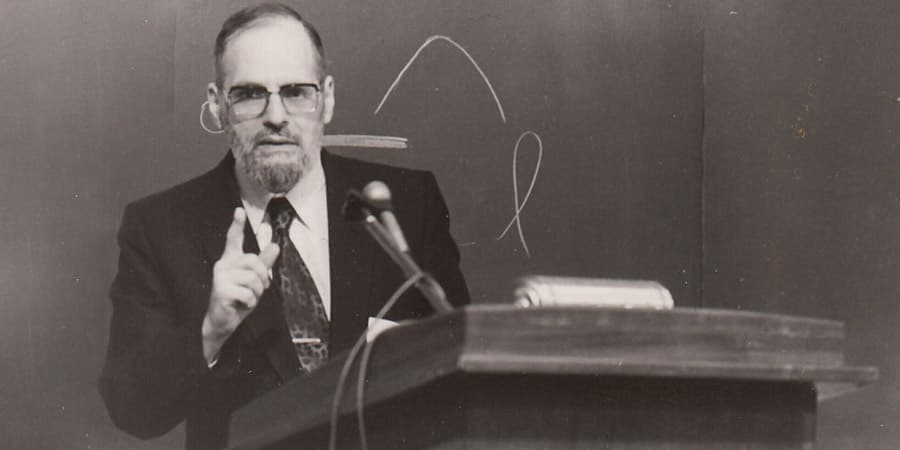
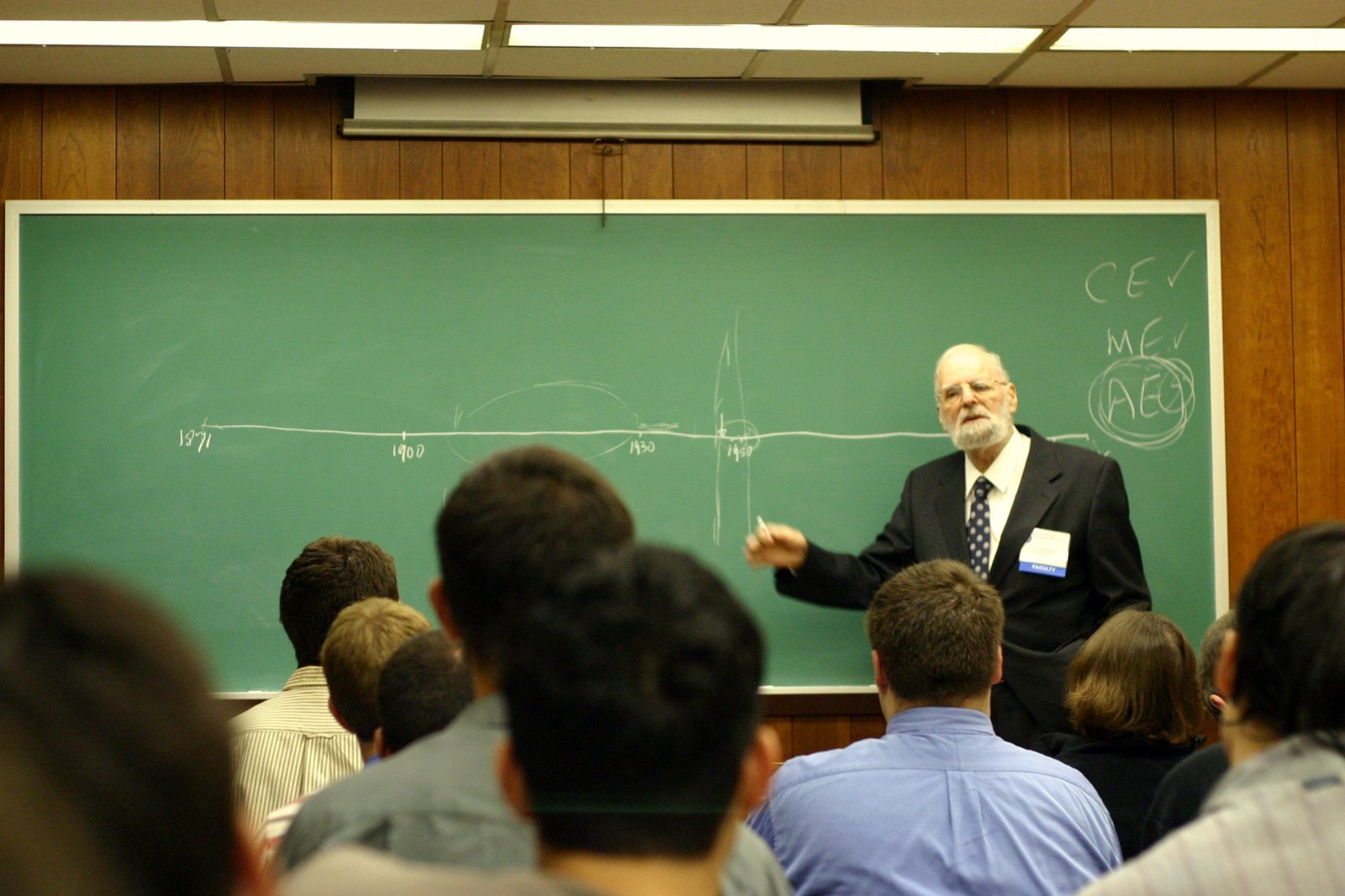
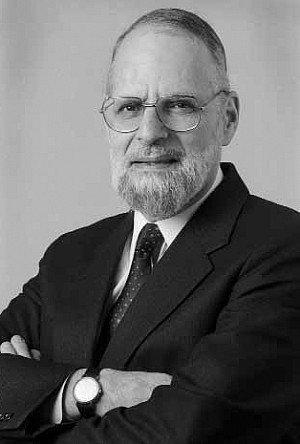
Portrait of Israel M. KirznerPortrait of Israel M. Kirzner: Israel Kirzner während eines Vortrags für die Foundation for Economic Education, 2006 (2006)Portrait of Israel M. Kirzner: Israel Kirzner, Beloit College Residency 2018 (2018)
FOL. 04 · N° 045 · Israel M. Kirzner
BIOGRAPHY

Life and Work

Kirzner was born in London, the son of a rabbi and Talmudic scholar. From 1940 he lived in Cape Town, where from 1947 he studied at the University of Cape Town and, as an external student, at the University of London. After taking a B.A. at Brooklyn College in 1954, he completed his studies at New York University (NYU) with an MBA in 1955 and a Ph.D. in 1957. At NYU he studied under Ludwig von Mises, among others. From 1954 he held various positions at NYU, where in 1968 he was finally appointed to a chair. Until his retirement in 2001, NYU offered, in collaboration with Ludwig Lachmann, a study programme in the tradition of the Austrian School that produced numerous economists who either counted themselves among the School or were substantially inspired by it. In Market Theory and the Price System (1963) and Methodological Individualism, Market Equilibrium and Market Process (1967), Kirzner developed a theory of markets and entrepreneurship that explained the endogenous tendency of an economy towards equilibrium through entrepreneurial action. What distinguishes the entrepreneur, according to Kirzner, is his particular "alertness", which enables him to detect price differentials and thus failures of coordination in the market. The profit motive then prompts the entrepreneur to act as a coordinating force. Kirzner's theory of the entrepreneur as "discoverer" is still regarded as pioneering today.
Metadata
17. Februar 1930
in London
living
Generation 4
Life stations

Stations

  1. 1930
    1930
    Birth

    Born on 17 February 1930 in London, the son of a rabbi and Talmudist.

  2. 1940
    1940
    Move to Cape Town

    Lived in Cape Town from 1940.

  3. ⁦1947–1948⁩
    ⁦1947–1948⁩
    Studies at the University of Cape Town and External Student in London

    From 1947, studied at the University of Cape Town and as an external student at the University of London.

  4. ⁦1950–1951⁩
    ⁦1950–1951⁩
    External Programme, University of London

    An external student in the University of London's External Programme, 1950–1951.[2]

  5. 1954
    1954
    B.A. at Brooklyn College

    Completed his B.A. at Brooklyn College in 1954.

  6. 1955
    1955
    MBA at New York University

    Completed his MBA at New York University in 1955.

  7. 1957
    1957
    Ph.D. at New York University

    Completed his Ph.D. at New York University in 1957; a student of Ludwig von Mises.[1]

  8. ⁦1957–2001⁩
    ⁦1957–2001⁩
    Teaching at New York University

    Held various positions at New York University from 1957 (initially as Assistant Professor, then appointed to a chair in 1968). Together with Ludwig Lachmann, he built a study programme in the tradition of the Austrian School. He retired as professor emeritus in 2001.[1]

  9. 1963
    1963
    “Market Theory and the Price System”

    Publication of “Market Theory and the Price System”, the foundation of his theory of the market and of entrepreneurship.[1]

  10. 1967
    1967
    “Methodological Individualism, Market Equilibrium and Market Process”

    Publication of “Methodological Individualism, Market Equilibrium and Market Process”.

  11. 1973
    1973
    “Competition and Entrepreneurship”

    Publication of “Competition and Entrepreneurship” (1973), his principal work on entrepreneurship theory and the market process.[1]

  12. 2006
    2006
    Global Award for Entrepreneurship Research

    Awarded the Global Award for Entrepreneurship Research (2006).[3]

Relationships

Influences

Influenced by · 1
  1. ⁦1957–1957⁩
    ⁦1957–1957⁩

    Took his doctorate under Mises at NYU and became his successor there as the foremost representative of the Austrian tradition in the USA.[1]

Influenced · 2
  1. 1981
    1981

    Lavoie promovierte 1981 an der NYU bei Kirzner mit einer Dissertation zur sozialistischen Kalkulationsdebatte.

  2. Frédéric Sautet⁦(1968–living)⁩ · Wiener Schule (zeitgenoessisch)

    Sautet betreute zusammen mit Boettke die Herausgabe der "Collected Works of Israel M. Kirzner" (Liberty Fund) – enge akademische Kollaboration mit Schüler-Charakter.[4]

Private seminar, colleagues, Mont Pèlerin · 3
  1. ⁦1949–1959⁩
    ⁦1949–1959⁩

    Teilnehmer am Mises-Privatseminar in New York 1949–1959 (NYU-Phase) – direkter Anschluss an die Wiener Privatseminar-Tradition über Mises.[5]

  2. ⁦1957–2001⁩
    ⁦1957–2001⁩

    At New York University, in collaboration with Ludwig Lachmann, he offered a study programme in the tradition of the Austrian School, from which numerous economists emerged.

  3. Mont Pèlerin Society · Sammelknoten Mont Pèlerin Society

    Mitglied der Mont Pèlerin Society – Wikipedia EN führt Kirzner explizit als MPS-Mitglied im klassisch-liberalen Netzwerk.

Israel M. Kirzner in the context of the School as a whole: five generations, their teacher-student lineages, circles and collegial ties.

SOURCES ON STATIONS AND RELATIONSHIPS10 citations · 2 sources
Topography

Places of Activity

CATALOGUE OF WORKS · CHRONOLOGICAL

The Books

1960s
1960
The Economic Point of View
OriginalEnglish
1963
Israel M. Kirzner's Market Theory and the Price System, published in 1963, is an intermediate price-theory textbook for university teaching. Its guiding idea is to understand the market as a process of adjustment: market participants continually align their plans with the actions of others, and states of equilibrium appear not as ends in themselves but as limiting cases in which the market process comes to rest. Building on the theory of consumption and utility, the book develops across thirteen chapters the theory of demand, production, cost and supply, the determination of product and factor prices, the general market process, as well as monopoly, competition and the allocation of resources through the price system; an appendix treats multi-period planning. The presentation rests on a deliberately limited attention to perfect competition. In the preface Kirzner acknowledges his debt to Mises, Böhm-Bawerk, Menger and Wicksteed, and dedicates the work to Ludwig von Mises.
OriginalEnglish
1970s
1973
Competition and Entrepreneurship
OriginalEnglish
Further editions
1979
Perception, Opportunity and Profit
OriginalEnglish
1980s
1982
This collection brings together the contributions to a conference held in 1981 at New York University to mark the 100th anniversary of Ludwig von Mises's birth. Eighteen essays and formal comments, arranged into nine essay-comment pairs plus an introduction, address four areas of Misesian economics: the choice of economic method, the nature of human action, the character of the market process, and the Misesian system as a framework for applied theory. Recurring points of dispute are subjectivism (from Menger through Mises to Shackle), aprioristic praxeology in the light of Lakatos's methodology of scientific research programmes, the relationship between equilibrium and the market process, the theory of entrepreneurship, as well as theories of monopoly, interventionism, and money. The contributors include, among others, James M. Buchanan, Ludwig M. Lachmann, Murray N. Rothbard, Gerald P. O'Driscoll, Leland B. Yeager, and Israel M. Kirzner. The volume documents the internal diversity and the open controversies of the modern Austrian School around 1980.
OriginalEnglish
1985
Discovery and the Capitalist Process
OriginalEnglish
1986
Subjectivism, Intelligibility and Economic Understanding: Essays in Honor of Ludwig M. Lachmann on his Eightieth Birthday [ed.]
OriginalEnglish
1989
Discovery, Capitalism and Distributive Justice
OriginalEnglish
1990s
1992
This essay collection by Israel M. Kirzner brings together thirteen contributions on the modern Austrian School of Economics. Its central thesis is that the market should be understood as a systematic process of discovery, sustained by entrepreneurial alertness, which closes gaps in knowledge and thereby produces a tendency towards coordination that is never complete yet always at work. Kirzner positions this approach as a 'middle way' between neoclassical equilibrium economics and the radically subjectivist critique, and defends it against objections from Loasby, Kregel, Buchanan and Vanberg. Part I develops the theory of the market process; Part II traces the emergence of the Austrian view from Menger to Mises and Hayek; Part III treats the knowledge problem, the price system and welfare economics; Part IV is devoted to self-interest as well as to property and justice in capitalism. Several chapters appeared earlier in Festschriften, reference works and journals, here brought together and framed.
OriginalEnglish
1994
Classics in Austrian Economics: A Sampling in the History of a Tradition [ed.]
OriginalEnglish
1995
Friedrich A. von Hayeks Preise und Produktion. Vademecum zu einem Klassiker
OriginalGerman
1996
The volume gathers four essays by Israel M. Kirzner on the theory of capital and interest, written in the subjectivist tradition of Carl Menger and Ludwig von Mises. At its core stands 'An Essay on Capital' (1966), which defines capital not through physical properties but through the position of goods within multi-period individual plans; in it Kirzner criticises the views of Knight, Haavelmo, and Hicks, as well as the treatment of capital, waiting time, and the measurement of capital. The remaining essays address Mises's contribution to the theory of capital and interest and defend the pure time-preference theory of interest (Fetter, Mises) against productivity-based objections, with reference to the Cambridge controversy and Samuelson's rice example. Kirzner explicitly assigns his approach to the Austrian School and sets it apart from the Fisherian productivity interpretation of interest.
OriginalEnglish
1997
How Markets Work: Disequilibrium, Entrepreneurship and Discovery
OriginalEnglish
2000s
2000
The Driving Force of the Market: Essays in Austrian Economics
OriginalEnglish
2001
Ludwig von Mises: The Man and His Economics
OriginalEnglish
Ludwig von Mises: The Man and His Economics
OriginalEnglish
2010s
2015
Austrian Subjectivism and the Emergence of Entrepreneurship Theory
OriginalEnglish
2018
Competition, Economic Planning, and the Knowledge Problem
OriginalEnglish
The Essence of Entrepreneurship and the Nature and Significance of Market Process
OriginalEnglish
2019
Reflections on Ethics, Freedom, Welfare Economics, Policy, and the Legacy of Austrian Economics
OriginalEnglish
ARTICLES · 68 CATALOGUED

Essays, Reviews, Lectures

1960s
1962
Rational Action and Economic Theory, Journal of Political Economy
OriginalEnglish
1963
Rejoinder, Journal of Political Economy
OriginalEnglish
The Premises of Growth Economics
OriginalEnglish
1965
What Economists Do, Suntern Economics Journal
OriginalEnglish
1967
Divergent Approaches in Libertarian Economic Thought, Intercollegiate Review
OriginalEnglish
Methodological Individualism, Market Equilibrium and Market Process,
OriginalEnglish
1968
On Man-made Tightropes, National Review
OriginalEnglish
1970s
1970
The ‚Power‘ Problem on Campus, Intercollegiate Review
OriginalEnglish
1972
Advertising, The Freeman
OriginalEnglish
Altruism, Social Responsibility, and the Market Economy, The Hillsdale Report
OriginalEnglish
1973
Tribute to Von Mises: On the Market, National Review
OriginalEnglish
1974
The Ugly Market: Why Capitalism is Hated, Feared and Despised, in The Freeman
OriginalEnglish
1975
Producer, Entrepreneur, and the Right to Property in S.L. Blumenfeld, ed., Property in a Humane Economy
OriginalEnglish
1976
On the Method of Austrian Economics in E.G. Dolan, ed., The Foundations of Modern Austrian Economics
OriginalEnglish
Philosophical and Ethical Implications of Austrian Economics, in Dolan
OriginalEnglish
The 1975 Nobel Memorial Prize in Economics: Some Uncomfortable Reflections, in The Freeman
OriginalEnglish
1978
Economics and Error, in L. Spadaro, ed., New Directions in Austrian Economics
OriginalEnglish
Entrepreneurship, Entitlement, and Economic Justice, in Eastern Economic Journal
OriginalEnglish
The Entrepreneurial Role in Menger’s System, in Atlantic Economic Journal
OriginalEnglish
1979
Entrepreneurship, Choice and Freedom, in ORDO Jahrbuch fur die Ordnung von Wirstchaft und Gesellschaft
OriginalEnglish
X-Inefficiency, Error and the Scope for Entrepreneurship, in M. Rizzo, ed., Time, Uncertainty and Disequilibrium: Exploration of Austrian Themes
OriginalEnglish
1980s
1980
The Morality of Capitalist Success, Culver-Stockton College, Canton
OriginalEnglish
The Primacy of Entrepreneurial Discovery, in Institute of Economic Affairs, [Readings 23] Prime Mover of Progress: The Entrepreneur in Capitalism and Socialism
OriginalEnglish
1981
Mises and the Renaissance of Austrian Economics, in Homage to Mises: The First Hundred Years
OriginalEnglish
Mises on Entrepreneurship, in Wirtschaftspolitische Blatter
OriginalEnglish
Policy Implications of Austrian Economics, in Journal of Economic Affairs
OriginalEnglish
The ‚Austrian‘ Perspective, in Bell and Kristol, eds., The Crisis in Economic Theory
OriginalEnglish
1982
Competition, Regulation, and the Market Process: An ‚Austrian‘ Perspective, CATO Institute Policy Analysis
OriginalEnglish
The Theory of Entrepreneurship in Economic Growth, in Encyclopedia of Entrepreneurship
OriginalEnglish
Uncertainty, Discovery and Human Action: A Study of the Entrepreneurial Profile in the Misesian System, in Israel M. Kirzner, ed., Method, Process and Austrian Economics: Essays in Honor of Ludwig von Mises
OriginalEnglish
1983
Die zentrale Bedeutung unternehmerischen Entdeckens, in Zeitschrift fur Wirstschaftspolitik
OriginalGerman
Entrepreneur and the Entrepreneurial Function: A Commentary, in J. Ronen, ed., Entrepreneurship: Where Did It Come From, and Where Is It Going?
OriginalEnglish
Entrepreneurship and the Future of Capitalism, in J. Backman, ed., Entrepreneurship and the Outlook for America
OriginalEnglish
1984
Economic Planing and the Knowledge Problem, in CATO Journal
OriginalEnglish
Incentives for Discovery, Economic Affairs
OriginalEnglish
The Entrepreneurial Process, in Calvin A. Kent, ed., The Environment for Entrepreneurship
OriginalEnglish
1985
Liberalism and Limited Government, in The Freeman
OriginalEnglish
Must Capitalism Yeild to Socialism? in Economic Affairs
OriginalEnglish
1986
Another Look at the Subjectivism of Costs, in Israel M. Kirzner, ed., Subjectivism, Intelligibility and Economic Understanding
OriginalEnglish
Entrepreneurship and American Competitiveness in S.M. Butler and W.J. Dennis, eds., Entrepreneurship: The Key to Economic Growth
OriginalEnglish
Individualistic Capitalism, in Donna C. Charron , ed., Views on Individualism
OriginalEnglish
Roundaboutness, Opportunity and Austrian Economics, in Martin J. Anderson, ed., The Unfinished Agenda
OriginalEnglish
The Open-Endedness of Knowledge: Its Role in the F.E.E. Formula, in The Freeman
OriginalEnglish
1987
Spontaneous Order and the Case for the Free Market, in Ideas on Liberty:Essays in Honor of Paul L. Poirot
OriginalEnglish
The Economics of Errant Entrepreneurs in The Freeman
OriginalEnglish
Unternehmer: Finder von Beruf
OriginalGerman
1988
The Economic Calculation Debate: Lessons for Austrians, in Review of Austrian Economics
OriginalEnglish
Welfare Economics: A Modern Austrian Perspective, in W. Block and L.H. Rockwell, eds., Man, Economy and Liberty, Essays in Honor of Rothbard
OriginalEnglish
1989
The Use of Labels in Doctrinal History: Comment on Baird, in Cato Journal
OriginalEnglish
1990s
1990
Carl Menger und die subjektivistische Tradition in der Ökonomie (translated from original English text contributed expressly for this volume) in Horst Claus Recktenwald, eds. Carl Mengers wegweisendes Werk
OriginalGerman
Discovery, Private Property, and the Theory of Justice in Capitalist Society, in Journal des Economistes et des Etudes Humaines
OriginalEnglish
Knowledge Problems and Their Solutions: Some Relevant Distinctions, in Cultural Dynamics
OriginalEnglish
Menger, Classical Liberalism, and the Austrian School of Economics, in Bruce Caldwell, ed., Carl Menger and his legacy in Economics,
OriginalEnglish
Self-Interest and the New Bashing of Economics in Critical Review
OriginalEnglish
The Market Process: An Austrian View in K. Groenveld, J.A.M. Maks, and J. Muysken, eds., Economic Policy and the Market Process, Austrian and Mainstream Economics
OriginalEnglish
The Meaning of Market Process, in A. Bosch, P. Koslowski, and R. Veit, eds., General Equilibrium or Market Process: Neoclassical and Austrian Theories of Economics
OriginalEnglish
1991
F.A. Hayek, 1899-1992, in Critical Review
OriginalEnglish
1992
Human Action, Freedom, and Economic Science, in J.W. Robbins and M. Spangler, eds., A Man of Principle: Essays in Honor of Hans F. Sennholz
OriginalEnglish
Subjectivism, Freedom, and Economic Law, Ludwig Lachmann Memorial Lecture, in South African Journal of Economics
OriginalEnglish
1993
The Morality of Pure Profit: The Logic and Illogic of a Popular Phobia, in Journal des Economistes et des Etudes Humaines
OriginalEnglish
The Pure Time Preference Theory of Interest: An Attempt at Clarification, in J.M. Herbener, ed., The Meaning of Ludwig von Mises: Contributions in Economics, Sociology, Epistemology, and Political Philosophy
OriginalEnglish
1994
A Tale of Two Worlds: Comment on Shmanske, in Advances in Austrian Economics
OriginalEnglish
The Entrepreneur in Economic Theory, in The Dynamics of Entrepreneurship: Crafoord Lectures No. 5
OriginalEnglish
The Ethics of Competition, in H. Siebert, ed., The Ethical Foundations of the Market Economy
OriginalEnglish
The Limits of the Market: The Real and the Imagined, in W. Moschel, M. Streit and U. Witt, eds., Marktwirtschaft und Rechtsordnung: Festschrift zum 70, Geburtstag von Prof. Dr. Erich Hoppmann
OriginalEnglish
1995
Hayek’s Theory of the Coordination of Markets: A Commentary to Accompany the Facsimile Edition in Preise und Produktion
OriginalEnglish
The Nature of Profits: Some Economic Insights and Their Ethical Implications, in R. Cowan and M.J. Rizzo, eds., Profits and Morality
OriginalEnglish
The Subjectivism of Austrian Economics, in G. Meijer, ed., New Perspectives on Austrian Economics
OriginalEnglish
APA
Chicago
German historical style