FOLIO I · THINKER · GEN. 02 · N° 035

Julius Friedrich Gans von Ludassy

Works
17
Articles
0
Generation
2.
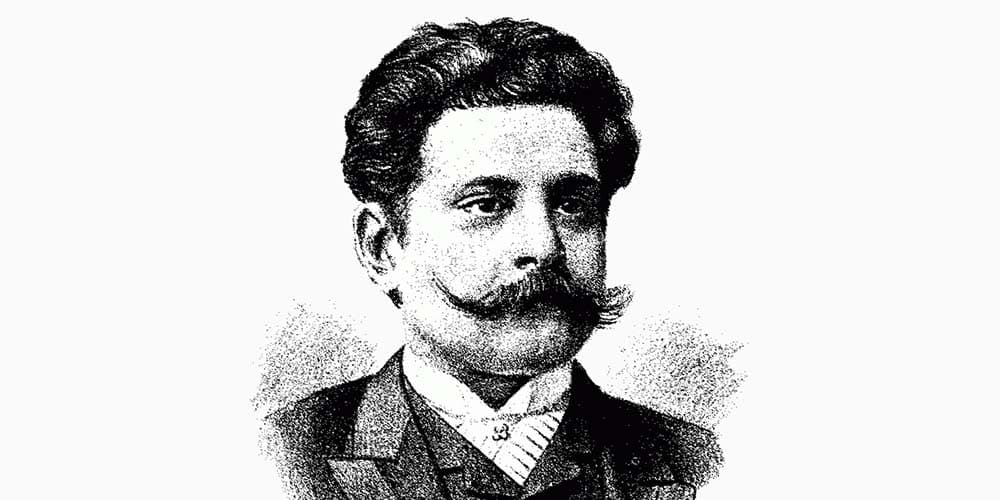
Portrait of Julius Friedrich Gans von Ludassy
FOL. 02 · N° 035 · Julius Friedrich Gans von Ludassy
BIOGRAPHY

Life and Work

Julius Friedrich Gans von Ludassy, a jurist of Hungarian descent holding a doctorate in law and, moreover, a student of medicine and philosophy, was one of the most outstanding students in Carl Menger's seminar for graduates who were already in working life and interested in economics. As an editor at various newspapers he regularly reviewed the economic literature, and he himself wrote an impressive methodological work of more than 1,000 pages, Die wirtschaftliche Energie (1893; Economic Energy). Notable is his early critique of the mechanical image of homo oeconomicus, as well as his conclusion that "economics [...] is the science of action in general" (ibid., 982). Five decades later Ludwig von Mises would fruitfully develop this action-oriented approach further, though without referring explicitly to Ludassy.
Metadata
13. April 1858
in Wien
30. September 1922
Generation 2
Life stations

Stations

  1. 1858
    1858
    Birth

    Born on 13 April 1858 in Vienna; of Hungarian descent.[1]

  2. 1880
    1880
    Studies in Law, Medicine and Philosophy— approximate

    A doctor of law who in addition studied medicine and philosophy.[1]

  3. 1885
    1885
    Menger's Seminar for Graduate Professionals— inferred

    One of the most outstanding students in Carl Menger's seminar for graduates who were already working professionals and interested in economics.

  4. 1885
    1885
    Editor and Reviewer of Economic Literature

    As an editor at various newspapers, he regularly reviewed the economic literature.[1]

  5. 1890
    1890
    Editor at the Fremdenblatt

    Editor at the Fremdenblatt from 1890.[1]

  6. 1893
    1893
    <em>Die wirtschaftliche Energie</em> (Economic Energy)

    An impressive methodological work, <em>Die wirtschaftliche Energie</em> (1893), running to over 1,000 pages; notable for its early critique of the mechanical image of homo oeconomicus and its conclusion that “economics [...] is the science of action as such”. Five decades later Mises would take up this action-oriented approach without explicitly referring to Ludassy.[1]

  7. 1894
    1894
    Editor-in-Chief of the Wiener Allgemeine Zeitung

    Editor-in-chief of the Wiener Allgemeine Zeitung from 1894.[1]

  8. 1902
    1902
    Editor at the Neue Freie Presse

    Editor at the Neue Freie Presse from 1902.[1]

  9. 1907
    1907
    Freelance Writer

    Worked as a freelance writer from 1907; president of the Vienna press organisation.[1]

  10. 1922
    1922
    Death

    Died on 30 September 1922 in Vienna (according to the biographical text; the data field acf.deathdate gives 30 July 1922).[1]

Relationships

Influences

Influenced by · 1
  1. Ludassy was one of the most outstanding pupils in Carl Menger's seminar for graduates who were already in professional life and interested in economics.

Julius Friedrich Gans von Ludassy in the context of the School as a whole: five generations, their teacher-student lineages, circles and collegial ties.

SOURCES ON STATIONS AND RELATIONSHIPS9 citations · 1 source
Topography

Places of Activity

CATALOGUE OF WORKS · CHRONOLOGICAL

The Books

1880s
1886
Maximen (Lustspiel)
OriginalGerman
1888
Garrick (Lustspiel)
OriginalGerman
Spleen (Lustspiel)
OriginalGerman
1890s
1893
The work is the first part of Julius v. Gans-Ludassy's three-part system of economic energy and treats economistic methodology, that is, the question of how economic knowledge is possible at all. The author construes economics as an independent science, one to be detached from philosophy, and grounds it on the principle of purposiveness, which he calls economic energy. In twelve chapters he develops its construction out of philosophy, a critical history of the methodological schools (rationalism, empiricism, historicism, the exact-realist current), and works through the economic phenomenon, the concept, the judgement, inference, the law, the law of development, the principle, and systematics. Against purely abstract as well as purely empirical methods he sets a rational empiricism, and explicitly sets himself apart from Menger, Eisenhart, Dilthey, and Wagner, on whose works he builds. Jena 1893.
OriginalGerman
1898
"Der goldene Boden" (The Golden Ground) is a Viennese Volksstück (popular play) in four acts by Julius von Gans-Ludassy, published in 1902; according to the preface, its performance was repeatedly banned by the Vienna censors. It portrays the misery of home-based work in the tailoring trade: the impoverished widower Peter Wimmer scrapes by as a piecework tailor, while the cutter Tichtl, who has worked his way up, simultaneously arranges a marriage for him to the older Agnes and seduces his daughter Leni. An intrigue revolves around Tichtl's post as manager, at the end of which the factory owner Brandstätter is stabbed to death; the jealous Spindelmann is the culprit, yet suspicion falls on Tichtl. Wimmer, who knows the truth and is bound by a sworn promise, is torn between revenge, compassion for his daughter, and his conscience. The play treats social exploitation, honour, and poverty in the milieu of the Viennese suburbs.
OriginalGerman
1900s
1900
Der letzte Knopf (Volksstück)
OriginalGerman
1903
Frühlingskinder (Volksstück)
OriginalGerman
1904
"Bessere Leut'" (Better People) is a Viennese dialect comedy in three acts by Julius v. Gans-Ludassy and Alexander Engel, published in 1904. At its centre stands the impoverished Dobler family, who keep up an outward appearance of bourgeois prosperity while the dismissed bookkeeper Anton Dobler, his ambitious wife Betti and their work-shy son Toni live on credit, borrowing and fraud. Against this milieu the play sets the daughter Martha, who refuses to marry out of calculation, seeks honest work as a piano teacher and in the end wins the minor official Etthofer out of affection. A second plot follows the foreman Zernitz, whose expected inheritance proves to be a castle in the air, as well as Toni's intrigue concerning the niece Paula. Through its dialogue, the comedy addresses class snobbery, money and respectability; the title 'bessere Leut'' is meant ironically.
OriginalGerman
Der Sonnenstaat (Drama)
OriginalGerman
Rätsel der Liebe (Einakter)
OriginalGerman
1910s
1912
Die heilige Schlange (Roman)
OriginalGerman
1913
"Der Sonnenstaat" (The Sun State) is a drama in five acts by Julius v. Gans-Ludassy, published in 1904 and written in blank verse. At its centre stands the former court jester Jean Marot who, as the disguised leader of an uprising, forces the weak King Leo to sign into being a "Sun State" organized along communist lines, with private property abolished, the law of inheritance repealed, child-rearing nationalized, and marriage dissolved. Over the acts that follow, the play shows how this coercive state founders on a shortage economy, bureaucracy, corruption, and the discontent of the people, while the chancellor Reinhart, acting as his antagonist, undermines it. The action culminates in Marot's downfall, his conviction for high treason, and his death on the scaffold, shortly before Queen Regine, who has risen to become regent, pronounces his pardon. In dramatic form, the work treats the conflict between the utopian promise of equality and individual liberty.
OriginalGerman
1914
Die Macht der Schatten (Novellen)
OriginalGerman
1915
Die grosse Stunde (Roman)
OriginalGerman
1917
Der tanzende Stern (Roman)
OriginalGerman
1920s
1920
Der Turm der Liebe (Roman)
OriginalGerman
1921
Der Baum des Lebens (Roman)
OriginalGerman
APA
Chicago
German historical style