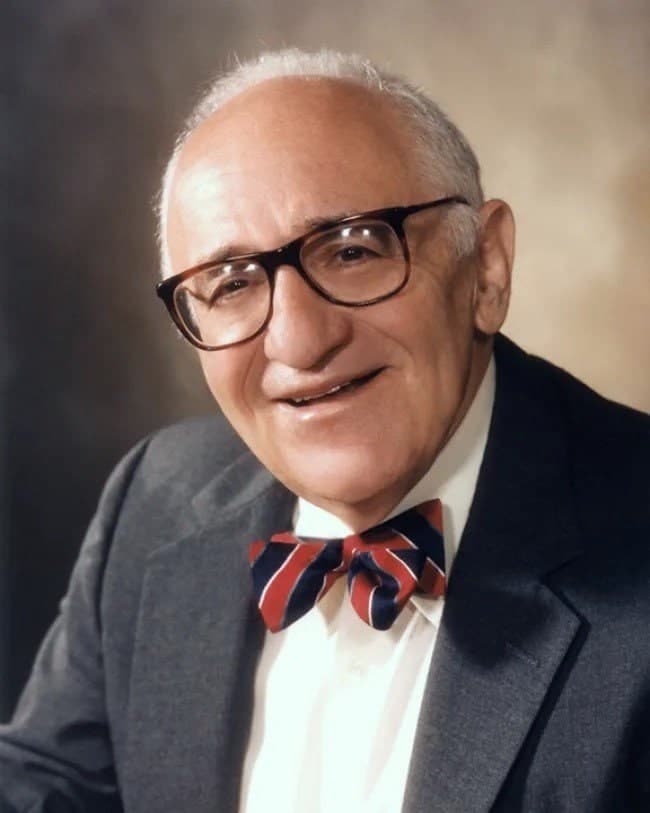
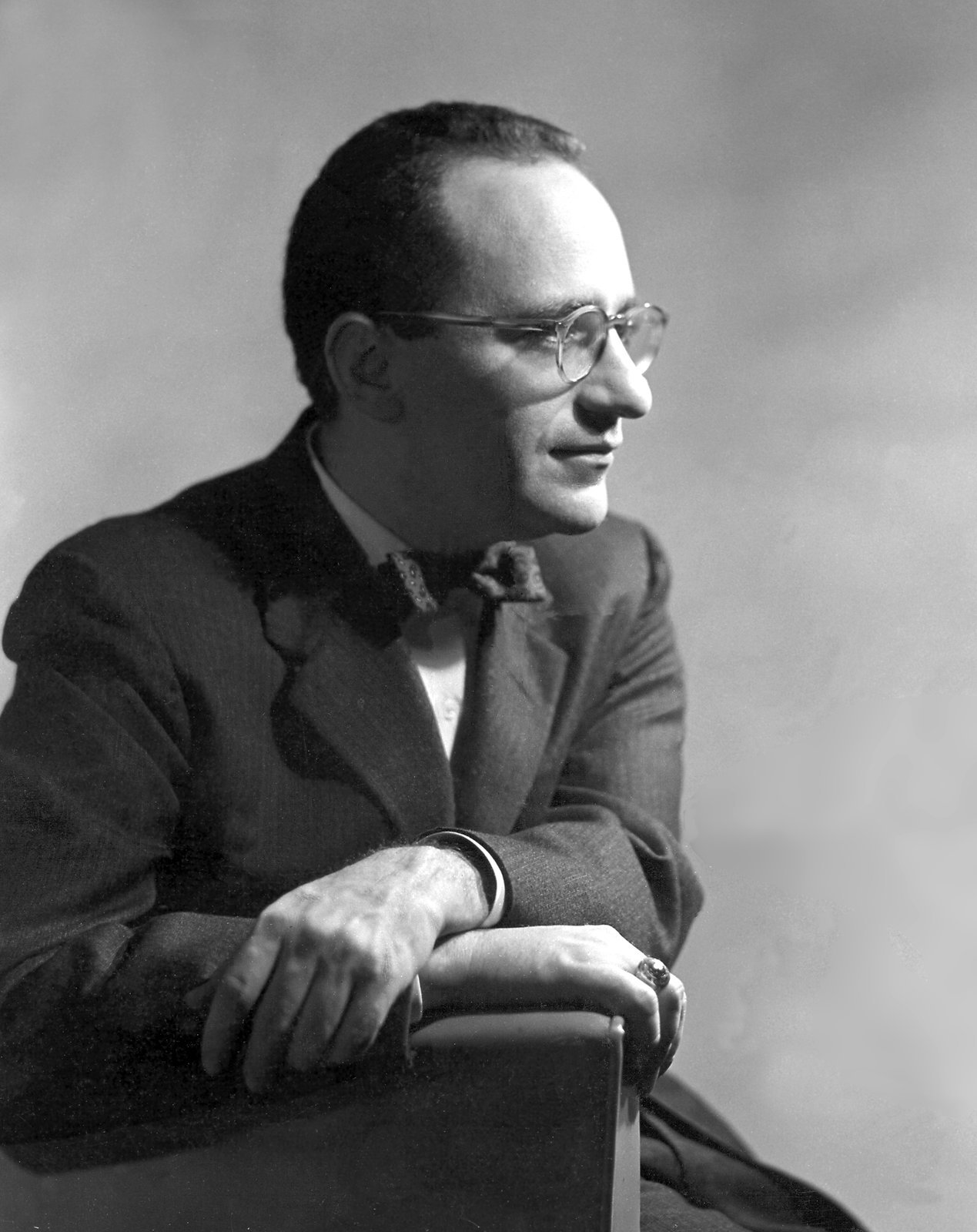
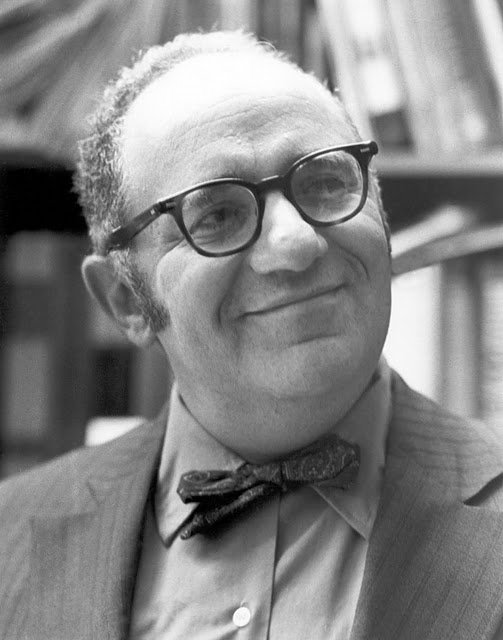
FOLIO I · DENKER

Murray N. Rothbard in audio: the life, the one idea, the most famous argument, and which work to read first. About 15 minutes.
New episodes appear continually. The newsletter will let you know when the next one is out.
Earned a B.A. in mathematics and a Ph.D. in economics at Columbia University.
After reading Mises's <em>Human Action</em>, he began attending the private seminar at NYU regularly in 1949; he remained active into the 1970s. bio_de names the 1950s as the central period.[1]
From the 1950s until 1962 as a “senior analyst” with a research grant from the William Volker Fund — the financial basis for Rothbard's early major works.[1]
Married JoAnn Beatrice Schumacher in New York City in 1953; she remained his life partner until Rothbard's death in 1995.[6]
Received his doctorate in 1956 with the dissertation “The Panic of 1819” at Columbia University. The work had been delayed for years — Arthur Burns rejected it; only after Burns had left the Columbia faculty to chair Eisenhower's Council of Economic Advisers was it accepted under Joseph Dorfman.[1]
Publication of the two-volume early work <em>Man, Economy, and State</em>, in which Rothbard further developed Mises's approaches in monetary theory, the theory of monopoly, and the theory of capital and interest.[1]
Publication of <em>America's Great Depression</em>. Rothbard set out how the inflation of the 'Roaring Twenties' led to the stock market crash of 1929, and contested the Keynesian interpretation.[1]
A pamphlet-like work on monetary history and state intervention in the monetary system; one of the most influential pleas for the gold standard in the second half of the 20th century.[1]
Professor at Brooklyn Polytechnic Institute from 1966 to 1986.[1]
A major libertarian manifesto; it outlines a systematic anarcho-capitalist social order.[1]
Co-founder of the Center for Libertarian Studies, a libertarian research and lecture organisation.[3]
Co-founder of the Cato Institute together with Charles Koch and Edward Crane; later a break with the Cato Institute. In the same year, founding of the “Journal of Libertarian Studies”.[1]
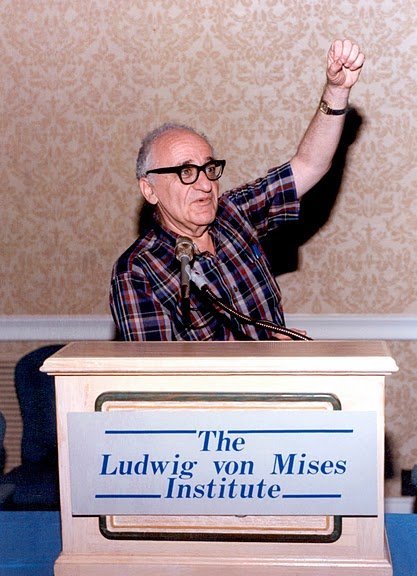
Co-founder of the Ludwig von Mises Institute in Auburn, Alabama; as Academic Vice-President, the central academic figure of the institute until his death.[1]
Professor at the University of Nevada in Las Vegas from 1986 to 1995.[1]
Publication of the two-volume work on the history of economic doctrine, presenting a comprehensive history of economic theory from the perspective of the Austrians.[1]
Regarded as perhaps the most important Mises student in the New World; Rothbard deepened his teacher's approaches especially in the theory of money, monopoly, capital and interest.[1]
Doctoral advisor at Columbia University: after Burns's move to Eisenhower's Council of Economic Advisers, the dissertation “The Panic of 1819” was accepted in 1956 under Joseph Dorfman.[1]
Originally the doctoral advisor at Columbia, he rejected the dissertation “The Panic of 1819” for years; a family acquaintance of the Rothbards. Only after Burns moved to Eisenhower's Council of Economic Advisers (1953) could the doctorate be completed.[5]
Intellectual antipode to Milton Friedman: Rothbard as a radical-libertarian Austrian counter-model to the monetarist Chicago School, with numerous public debates on monetary, central-bank and business-cycle policy.[1]
Hoppe went to the USA for the purpose of study and became a long-standing student of Murray N. Rothbard; he eventually took over his chair at the University of Nevada, Las Vegas.[2]
Samuel Edward Konkin III wird in der Wikipedia-EN-Infobox als „notable student" Rothbards aufgeführt; sein Agorismus baut explizit auf Rothbards anarchokapitalistischem Ansatz auf.[5]
Walter Block wird in der Wikipedia-EN-Infobox als „notable student" Rothbards geführt; sein Werk steht ausdruecklich in der Rothbard-Tradition.[5]
Participant in the Mises-Privatseminar at NYU from 1949 to the end of the 1950s, with activity into the 1970s.[1]
William Volker Fund förderte Rothbard über zehn Jahre als Senior Analyst und Stipendiat — die finanzielle Basis seiner frühen Hauptwerke.[1]
Co-founder, with Charles Koch and Edward Crane, of the Cato Institute in 1977; break in 1981.[3]
Co-founder of the Cato Institute in 1977 together with Edward Crane and Charles Koch; break in 1981 (Rothbard was removed from the board).[4]
Garrison war über Jahrzehnte Adjunct Scholar am Mises Institute und teilte mit Rothbard die Verteidigung der Mises-Hayek-Konjunkturtheorie.
Mit Lew Rockwell Mitbegründer des Ludwig von Mises Institute (Auburn, Alabama) 1982; Rockwell wird in mises.org/profile als „Institutsgründer" und akademischer Weggefaehrte Rothbards bis zu dessen Tod geführt.[1]
From 1986 Hoppe and Rothbard worked together at the University of Nevada, Las Vegas; after Rothbard's death in 1995 Hoppe took over his chair.
Murray N. Rothbard in the context of the School as a whole — five generations, their teacher-student lineages, circles and collegial ties.
Show in the family tree →