FOLIO I · THINKER · GEN. 02 · N° 021

Rudolf Sieghart

Works
4
Articles
0
Generation
2.
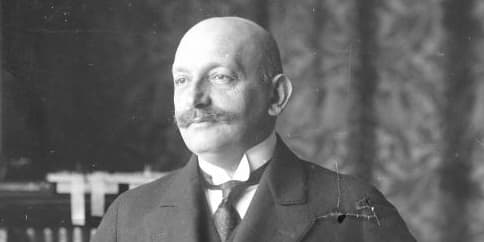
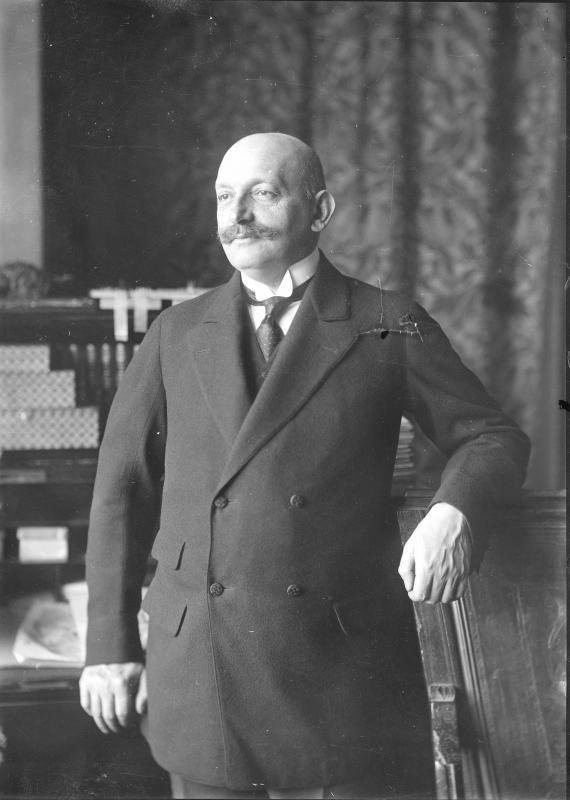
Portrait of Rudolf SieghartPortrait of Rudolf Sieghart: Rudolf Sieghart, 1918, Photographie von Ferdinand Schmutzer (1918)
FOL. 02 · N° 021 · Rudolf Sieghart
BIOGRAPHY

Life and Work

The rabbi's son from Troppau (today Opava, Czech Republic), who had lost one parent, had to finance his law studies in Vienna himself. In 1895 he converted to Catholicism, became the son-in-law of Carl Samuel Grünhut (1844-1929), professor of commercial law at the University of Vienna, and entered the financial administration. With a treatise on Die öffentlichen Glückspiele (Public Games of Chance, 1899) Sieghart was able to obtain his habilitation, and he then went into politics. As the closest associate of Prime Minister Körber (1850-1919) he played a powerful and at times controversial role, above all in those personnel decisions that concerned the senior posts in the bureaucracy. In 1912 he became a member of the House of Lords and, as governor of the Boden-Credit-Anstalt with its affiliated industrial groups and newspapers, he remained an influential business leader well into the First Republic.
Metadata
13. März 1866
4. August 1934
Generation 2
Life stations

Stations

  1. 1866
    1866
    Birth

    Born on 13 March 1866 in Troppau, Austrian Silesia (today Opava, Czech Republic), the son of a rabbi.[2]

  2. 1883
    1883
    Matura at the Troppau Gymnasium

    Passed the Matura, the secondary-school leaving examination, in 1883 at the Gymnasium in Troppau.[2]

  3. ⁦1883–1887⁩
    ⁦1883–1887⁩
    Studies in Law and Political Science

    Studies in law and political science at the University of Vienna (1883 to 1887), which he had to finance himself as a half-orphan; at the same time he served as a one-year volunteer (Einjährig-Freiwilliger) and later as a reserve officer.[2]

  4. 1891
    1891
    Director at the Press Office of the “Vereinigte Deutsche Linke” (United German Left)

    Became director of the party and press office of the “Vereinigte Deutsche Linke” (United German Left) in 1891.[2]

  5. 1892
    1892
    Doctorate in Law (Dr. iur.)

    Earned his doctorate in law (Dr. iur.) at the University of Vienna in 1892.[2]

  6. 1894
    1894
    Entry into the Financial Administration

    Entered the financial administration in 1894.[2]

  7. 1895
    1895
    Conversion to Catholicism

    Converted to Catholicism in 1895; in the same period he married into the family of the Vienna professor of commercial law Carl Samuel Grünhut (1844–1929).[2]

  8. 1895
    1895
    Marriage into the Grünhut Family— approximate

    Became the son-in-law of Carl Samuel Grünhut, professor of commercial law at the University of Vienna. His wife Mathilde died in 1911 (aged 39).

  9. 1897
    1897
    Appointment to the Office of the Council of Ministers

    Appointed in December 1897 to the Imperial-Royal Office of the Council of Ministers (k.k. Ministerratspräsidium).[1]

  10. 1900
    1900
    Habilitation with “Die öffentlichen Glückspiele” (Public Games of Chance)

    Completed his Habilitation with the treatise “Die öffentlichen Glückspiele” (Public Games of Chance).[2]

  11. 1900
    1900
    Closest Associate of Minister-President Körber— inferred

    After his Habilitation he entered politics; as the closest associate of Minister-President Körber (1850–1919) he played a powerful and at times controversial role, above all in personnel decisions for top positions in the bureaucracy.

  12. ⁦1902–1910⁩
    ⁦1902–1910⁩
    Head of the Presidial Chancellery under Körber

    From 1902 to 1910 head of the Presidial Chancellery of the Office of the Council of Ministers; closest associate of Minister-President Ernest von Körber, involved in the electoral reform and the Ausgleich (settlement) of 1907.[2]

  13. 1904
    1904
    Head of Section

    Promoted to Sektionschef (section head, the highest civil-service rank) in 1904.[2]

  14. ⁦1910–1929⁩
    ⁦1910–1929⁩
    Governor of the Boden-Credit-Anstalt

    From 1910 to 1929 (with an interruption from 1917 to 1919) governor and, from 1919, president of the Allgemeine Österreichische Boden-Credit-Anstalt; with its affiliated industrial groups and newspapers he remained an influential business leader well into the First Republic; in 1929 it merged with the Creditanstalt following insolvency.[2]

  15. 1912
    1912
    Member of the Herrenhaus (House of Lords)

    Became a member of the Herrenhaus (the upper house) in 1912.

  16. 1934
    1934
    Death

    Died on 4 August 1934 in Lucerne.[2]

Relationships

Influences

Private seminar, colleagues, Mont Pèlerin · 5
  1. 1894
    1894
    Ernst von Plener⁦(1841–1923)⁩

    Joined the k.k. Finanzministerium in 1894 under Finance Minister Ernst von Plener; Plener as the first ministerial superior and political patron of his career within the civil service.[2]

  2. 1895
    1895
    Carl Samuel Grünhut⁦(1844–1929)⁩ · Wiener Rechtswissenschaft

    In 1895, after his conversion to Catholicism, he became the son-in-law of Carl Samuel Grünhut (1844-1929), professor of commercial law at the University of Vienna.

  3. ⁦1895–1897⁩
    ⁦1895–1897⁩

    Sieghart diente ab 1894 im k.k. Finanzministerium, in dessen Steuerreform-Arbeit Böhm-Bawerk die treibende Kraft war, und wechselte 1897 ins Ministerratspräsidium — der Beginn seines Aufstiegs unter Körber (NDB Bd. 24, 2010, S. 353 f.).

  4. ⁦1900–1904⁩
    ⁦1900–1904⁩
    Ernest von Koerber⁦(1850–1919)⁩

    As the closest associate of Prime Minister Ernest von Körber (1850-1919), Sieghart played a powerful and at times controversial role, above all in personnel decisions for top positions in the bureaucracy.[2]

  5. ⁦1921–1929⁩
    ⁦1921–1929⁩

    Reisch wurde 1921 Vizepräsident der Allgemeinen Boden-Credit-Anstalt unter Präsident Sieghart. Ab 1922 als OeNB-Präsident gleichzeitig zentraler Bankenregulator und Refinanzierer für Siegharts BCA bis zum Zusammenbruch 1929 (OeBL).

Rudolf Sieghart in the context of the School as a whole: five generations, their teacher-student lineages, circles and collegial ties.

SOURCES ON STATIONS AND RELATIONSHIPS16 citations · 3 sources
  • [3]Ableitinger, Diss. Graz 1964 - Sieghart und seine Taetigkeit im Ministerratspraesidium
Topography

Places of Activity

CATALOGUE OF WORKS · CHRONOLOGICAL

The Books

1890s
1898
Geschichte und Statistik des Zalenlottos in Österreich
OriginalGerman
1899
Die öffentlichen Glückspiele
OriginalGerman
1910s
1915
Zolltrennung und Zolleinheit
OriginalGerman
1930s
1932
Die letzten Jahrzehnte einer Grossmacht
OriginalGerman
APA
Chicago
German historical style