FOLIO I · THINKER · GEN. 03 · N° 025

Hans Mayer

Works
2
Articles
0
Generation
3.
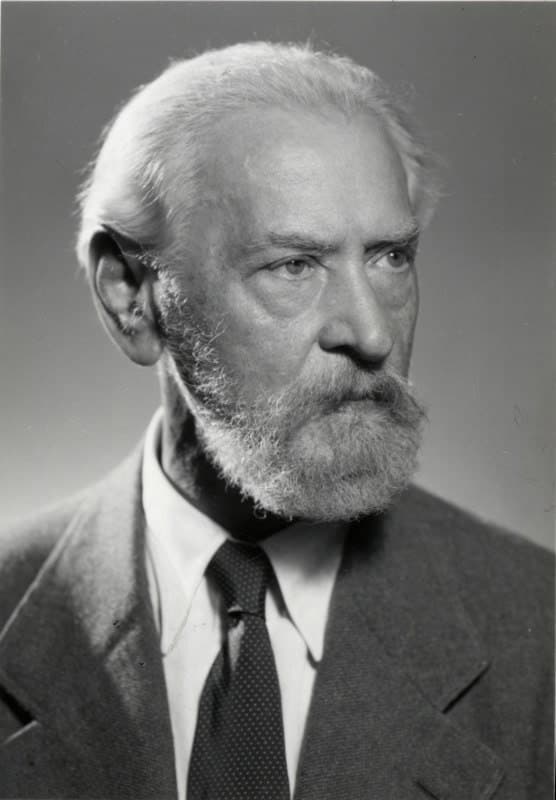
Portrait of Hans Mayer
FOL. 03 · N° 025 · Hans Mayer
BIOGRAPHY

Life and Work

Born and raised in Vienna, Mayer took his doctorate in law in 1907 and worked in the Austrian financial administration until 1911 (interrupted by a year of study in Heidelberg). Mayer was never habilitated. His personal file contains a terse note on the matter: "Appointed associate professor at the University of Freiburg on the basis of unpublished manuscripts (Theorie der Preisbildung, the theory of price formation) even before the habilitation could be carried out at the university." After Freiburg he went in 1914 to the German Technical University in Prague. When the war ended he served as head of the budget section in the State Office for Military Affairs in Vienna, took up a professorship in Graz in 1921 and in 1923 was appointed to Vienna as the successor to Friedrich von Wieser. Mayer was continually embroiled in running feuds with his rival Othmar Spann and likewise had a strained relationship with Mises. Despite the small number of his academic contributions (Mayer wrote scarcely more than a handful of essays and a few articles in the fourth edition of the Handwörterbuch der Staatswissenschaften, the Concise Dictionary of the Political Sciences), he was appointed dean in 1927/1928 and received calls to Frankfurt (1927), Bonn (1932) and Kiel (1933). Already in middle age he rose to the highest salary category. Friedrich von Wieser had promoted Hans Mayer by every means available. The influential mentor developed a kind of father-son relationship with Mayer. After Wieser's death, Mayer moved into the house Wieser had left behind in Vienna's 19th district. Yet the tall, slim, reddish-blond beau with the winning appearance could not live up to the scholarly expectations placed on him. He remained a loner, noticeably distant from most other members of the Austrian School. The judgements of Mayer are by and large unfavourable and not free of personal resentment. From the point of view of the émigrés, Mayer's career embodied the dark side of the country from which they had been driven out: the favouritism, the half-hearted work ethic, the vain self-satisfaction and the blatant opportunism that apparently allowed Mayer, with impunity, to swear the requisite oaths of office to the various regimes a total of five times.
Metadata
7. Februar 1879
28. Oktober 1955
Generation 3
Life stations

Stations

  1. 1879
    1879
    Birth

    Born on 7 February 1879 in Vienna, where he also grew up.[3]

  2. 1907
    1907
    Doctorate in Law

    Doctorate in law in 1907.

  3. ⁦1907–1911⁩
    ⁦1907–1911⁩
    Position in the Austrian Financial Administration

    Worked in the Austrian financial administration until 1911, interrupted by a one-year period of study in Heidelberg.

  4. ⁦1911–1914⁩
    ⁦1911–1914⁩
    Associate Professorship, Freiburg

    Appointed associate professor at the University of Freiburg on the strength of unpublished manuscripts (on the theory of price formation), even before completing the Habilitation. Mayer never obtained one.

  5. ⁦1914–1918⁩
    ⁦1914–1918⁩
    German Technical University in Prague

    In 1914 to the German Technical University in Prague.

  6. 1918
    1918
    Head of the Budget Section at the State Office for Military Affairs— approximate

    After the end of the war, Mayer served as head of the Budget Section at the State Office for Military Affairs in Vienna.

  7. ⁦1921–1923⁩
    ⁦1921–1923⁩
    Professorship in Graz

    Took up a professorship in Graz in 1921.

  8. ⁦1923–1950⁩
    ⁦1923–1950⁩
    Appointment to Vienna as Wieser's successor

    Appointed to Vienna in 1923 as the successor to Friedrich von Wieser.[4]

  9. ⁦1927–1928⁩
    ⁦1927–1928⁩
    Dean of the University of Vienna

    Appointed Dean in 1927/1928.

  10. 1932
    1932
    "Der Erkenntniswert der funktionellen Preistheorien" (The Epistemic Value of Functional Price Theories)

    Publication of the roughly 100-page monograph "Der Erkenntniswert der funktionellen Preistheorien" (The Epistemic Value of Functional Price Theories); a critique of equilibrium-analytical approaches.[4]

  11. 1955
    1955
    Death

    Died on 28 October 1955 in Vienna.[3]

Relationships

Influences

Influenced by · 1
  1. Received his doctorate in law at the University of Vienna in 1907; identified in the bio_de and in the Klausinger study as a student of Friedrich von Wieser. Wieser developed a father-son relationship with Mayer and supported him by every means.[4]

Influenced · 5
  1. 1923
    1923
    Othmar Spann⁦(1878–1950)⁩ · Universalismus

    Mayer was continually embroiled in trench warfare with his opponent Othmar Spann.[4]

  2. ⁦1925–1925⁩
    ⁦1925–1925⁩

    Already during his studies, became an assistant to Hans Mayer at the Chair of Political Economy of the University of Vienna and received his doctorate under him in 1925.[1]

  3. 1925
    1925

    Received his doctorate in law in Vienna and became an assistant to Hans Mayer; for racial and faculty-political reasons he was not granted the Habilitation.

  4. ⁦1930–1938⁩
    ⁦1930–1938⁩

    Mahr was a student of Hans Mayer, from 1930 his research assistant at the University of Vienna, and in 1950 took over his chair as his successor.

  5. 1950
    1950

    Eventually completed his Habilitation at the University of Vienna under Hans Mayer.[2]

Private seminar, colleagues, Mont Pèlerin · 1
  1. 1923
    1923

    In 1923 Mayer was appointed to the Vienna chair as successor to Friedrich von Wieser; after Wieser's death Mayer moved into the house Wieser had left behind in Vienna's 19th district.[4]

Hans Mayer in the context of the School as a whole: five generations, their teacher-student lineages, circles and collegial ties.

SOURCES ON STATIONS AND RELATIONSHIPS9 citations · 3 sources
Topography

Places of Activity

CATALOGUE OF WORKS · CHRONOLOGICAL

The Books

1920s
1927
Die Wirtschaftstheorie der Gegenwart [mit R. Reisch und F. A. Fetter]
OriginalGerman
1930s
1930
Die Wert- und Preisbildung der Produktionsmittel
OriginalGerman
APA
Chicago
German historical style