FOLIO I · DENKER

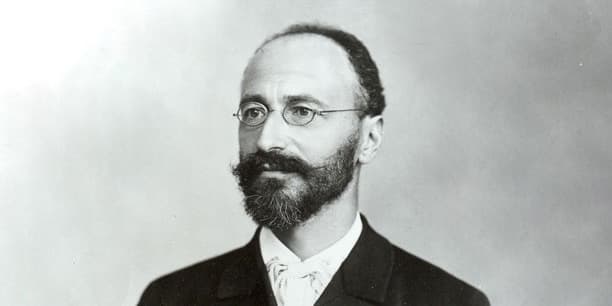
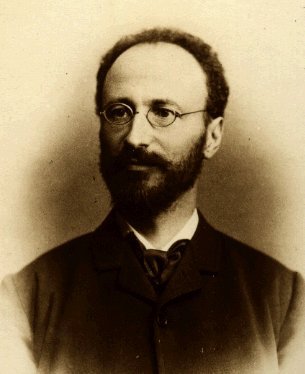
Eugen von Böhm-Bawerk in audio: the life, the one idea, the most famous argument, and which work to read first. About 16 minutes.
New episodes appear continually. The newsletter will let you know when the next one is out.
Studies in law and political science at the University of Vienna.[12]
Civil servant in the Lower Austrian Finanzprokuratur (Treasury Solicitor's Office) from 1872. In parallel, study leave in Heidelberg, Leipzig and Jena with Knies, Roscher and Hildebrand.[1]
Habilitation as a Privatdozent in economics at the University of Vienna.[1]
Marriage to Paula von Wieser, sister of Friedrich von Wieser, making him the brother-in-law of his long-time associate.[12]
Associate Professor of Political Economy at the University of Innsbruck.[1]
Publication of "History and Critique of Interest Theories" as the first volume of "Capital and Interest"; with a detailed critique of Marx's labour theory of value and a rejection of Menger's theory of uses.[1]
Publication of "Positive Theory of Capital" as the second volume of "Capital and Interest"; the foundation of an "Austrian" theory of capital and interest and a decisive contribution to the international reputation of the Austrian School.[1]
Move to the Vienna Ministry of Finance as Ministerialrat (senior ministerial counsellor); later Sektionschef (head of department).[16]
Appointment to the Austrian Herrenhaus (House of Lords).[11]
Full professor of political economy at the University of Vienna until his death in 1914. His private seminar shaped, among others, Mises, Schumpeter and Otto Bauer.[1]
Vice-President of the Imperial Academy of Sciences in Vienna.[1]
President of the Imperial Academy of Sciences in Vienna until his death.[1]
Studied under Bruno Hildebrand in Jena from 1876 to 1878.[17]
Studied from 1876 to 1878 under Karl Knies in Heidelberg during a journey abroad.[17]
Studied together with Wieser under Wilhelm Roscher in Leipzig from 1876 to 1878.[17]
Subjected Karl Marx's socialist labour theory of value, in “Die Geschichte und Kritik der Kapitalzinstheorien” (1884), to a detailed and consistently dismissive critique, thereby laying the cornerstone of the Austrian School's tradition of Marxism criticism.[1]
Studied law at the University of Innsbruck in 1884-1887, among others under Eugen von Böhm-Bawerk; at that time Böhm-Bawerk was a professor in Innsbruck.[2]
Studied under Eugen von Böhm-Bawerk and took part in his seminar at the University of Vienna; together with Menger one of the formative teachers for Mises' turn to the Austrian School.[8]
Wandte sich während des Studiums in Wien unter dem Einfluss Eugen von Böhm-Bawerks vor allem der Nationalökonomie zu; Böhm-Bawerk war einer der prägenden akademischen Lehrer der Wiener Studienzeit.[3]
After his doctorate he devoted himself, on the side, to Böhm-Bawerk's theory of interest, edited the shorter writings of the revered Böhm-Bawerk, and in his Habilitation thesis renewed and broadened the critique of David Ricardo.[19]
Otto Bauer nahm als Marxist am Privatseminar Böhm-Bawerks 1905-06 an der Universität Wien teil — eine seltene Gelegenheit der direkten Konfrontation zwischen österreichischer Schule und Austromarxismus.[12]
Otto Neurath, later a philosopher of the Vienna Circle, was among Böhm-Bawerk's students.[12]
Rudolf Hilferding, a prominent Marxist, attended Böhm-Bawerk's private seminar in Vienna in 1905-06.[14]
Studied and took his doctorate in 1914 at the University of Vienna under Eugen von Böhm-Bawerk; dissertation on the monetary and credit economy with a mathematical approach.[13]
Wurde als sehr junger Student in Eugen von Böhm-Bawerks Privatseminar an der Universität Wien aufgenommen; mises.org bezeichnet Strigl als „einen der jüngsten Böhm-Bawerk-Schüler".[10]
Henryk Grossmann zählt laut Wikipedia EN-Infobox zu Böhm-Bawerks „notable students“.[14]
Student of Eugen Böhm-Bawerk during the latter's teaching in Innsbruck; on this basis he received the venia legendi in economics in 1889 and turned to the marginal-utility school.[5]
Engaged in a famous debate with the American economist John B. Clark over capital maintenance and the period of production.[8]
Wieser and Böhm-Bawerk were friends from youth and fellow students at the University of Vienna, and at the same time brothers-in-law; in 1880 Böhm-Bawerk married Wieser's sister Paula. The relationship was thus, in more than one respect, a lifelong companion.[8]
In 1892 became Eugen von Böhm-Bawerk's successor as full professor at the University of Innsbruck; institutional continuity of the chair in the spirit of the Austrian School.[7]
Als Privatdozent (1895–1908) und ab Oktober 1898 Ordinarius für politische Ökonomie an der k.k. Exportakademie im Palais Festetics gehörte Feilbogen zur engen Wiener Nationalökonomen-Szene um Böhm-Bawerk, Wieser und Philippovich. Die Mit-Übersetzung des Capitalzins-Anhangs 1903 setzt direkten Arbeitskontakt voraus.
Böhm-Bawerk war Siegharts Vorgesetzter im k.k. Finanzministerium (Steuerreform-Sektion) und empfahl ihn 1897 ans Ministerratspräsidium, was Siegharts Aufstieg unter Körber überhaupt erst ermöglichte (de.wikipedia.org/wiki/Rudolf_Sieghart).
Schumpeter besuchte Böhm-Bawerks berühmtes Privatseminar an der Universität Wien gemeinsam mit dem jungen Mises (Aufgabenhinweis Pipeline-Briefing).
Strigl wurde als sehr junger Student in Böhm-Bawerks Wiener Privatseminar aufgenommen — Mit-Teilnehmer waren u. a. Otto Bauer, Nikolai Bucharin, Ludwig von Mises, Otto Neurath und Joseph Schumpeter.[10]
As a subjectivist value theorist, together with Eugen von Böhm-Bawerk as the senior official in charge, he put progressive taxation into practice in the reform of the direct personal tax.
Eugen von Böhm-Bawerk in the context of the School as a whole — five generations, their teacher-student lineages, circles and collegial ties.
Show in the family tree →